Knowledge check with explanations

Odor Removal quiz and study guide

Find out what you already understand, then read the parts you missed.

This quiz checks whether you understand how smells that will not go away really get solved, not how fixes are advertised. Many people show up sure that the right spray, candle, or rented machine will settle it. The questions here walk through the ideas professionals rely on instead. Find the material holding the smell. Decide what has to be removed. Learn which air treatments are safe in a home where people are living. And know when a smell is warning you about a hazard. You do not need any technical background. Each question has a short explanation after you answer, so a wrong guess teaches as much as a right one. Take it before you call anyone and you will ask sharper questions.

Get an email reply about odor removal

Send a short message and get an instant email confirmation. A coordinator then replies by email. This form does not send emergency help; call 911 first if anyone is in danger.

Tell us what you need help with. Share a short description; please leave out medical details, access codes, and other sensitive information.

A request does not confirm a booking. For immediate danger, contact local emergency services.

Or email info@odorcleanup.online

Use the study guide below if you want all the ideas in one place before you start. It covers six themes that come up in nearly every odor job. How the source is found. Who is responsible for the space and the choice. How to keep the problem from spreading. How cleaning differs from treating. Where the removed material goes. And how to record what was done, so the result holds up for a buyer, a tenant, or an insurer. The quiz draws on these same themes. Nothing here replaces an inspection of your real building. But it will help you tell a careful plan from a sales pitch.

Odor Removal knowledge check

15 questions about real odor removal situations: staying safe, what happens, cost, choosing help and the rules. Every answer comes with a short explanation.

Why this quiz matters

Knowing these basics makes it easier to spot bad advice and ask a company the right questions. This quiz is educational — it does not certify anyone. After the quiz, review the explanations for questions you missed. For professional guidance on your specific situation, use the contact form at the top of the page for an email reply.

Progress1 / 15
ProcessQ1

A basement still smells musty weeks after a pipe leak. What should a crew do before any air treatment?

Study guide: the six ideas behind the questions

Read these before or after the quiz. They cover the concepts every question draws on, written for odor removal specifically.

1Identifying the source

Every lasting odor fix starts with one question: what material is holding the smell? Professionals answer it with tools and by spotting patterns. UV light shows urine stains you cannot see in daylight. Moisture meters find damp drywall behind a musty wall. Inspection cameras look inside ducts and walls. The type of odor narrows the search. With a death odor, look wherever fluids went. With smoke, look at surfaces with residue and at the air handler. With sewage, follow the path of the backup. A provider who cannot say where the source is and how they confirmed it is guessing. A plan built on a guess tends to fail after the first humid week.

2Authority and ownership

Before any material is removed, someone must have the right to approve it. In a single-family home, that is the owner. In a rental, the tenant can report and clean. But tearing out building parts and repainting are up to the owner or manager, and the lease will say who pays. In a condo or apartment, the source may be in a neighbor's unit, a shared duct, or a shared wall. That means the association or management has to arrange access. In an estate, the executor usually signs. Make clear who can approve work and who will pay before a crew opens a floor. Undoing a tear-out no one approved is far harder than waiting a day for a signature.

3Containment and spread

Odor chemicals travel on air currents and on tiny particles. While the source is being found and removed, the goal is to keep them from settling in more places. That means turning off the forced-air system when you can, so the ducts stop spreading the smell. Close doors to rooms that are not affected. When material is being cut out, use air filters and plastic walls that keep dust inside the work area. Soft items like curtains, bedding, and stuffed furniture soak up odor fast. Moving them out of the smelly space early can save them. Keeping the problem contained is not exciting. But it is the difference between fixing one room and later finding the whole house needs treatment.

4Cleaning versus treatment

Cleaning removes residue. That means washing smoke film off walls, pulling urine out of a hard floor, or wiping soot off belongings. Treatment changes what is left. Enzymes break down urine chemicals. Hydroxyl machines and ozone break down odor chemicals in the air and on surfaces. Thermal fogging carries deodorizer into the same places smoke went. Treatment without cleaning is a mistake, because these machines cannot reach a source buried in pad or framing. Ozone in particular needs an empty building. It needs airing out before anyone comes back, and care around rubber and some plastics. Hydroxyl has different rules about who can be inside. Ask which method is planned, why it fits your odor, and when it is safe to go back in.

5The waste path

Material removed during an odor job has to go somewhere. Where it goes depends on what it is. Urine-soaked pad, smoke-damaged insulation, and regular belongings usually go out as building debris or bulk trash. Anything with blood or fluids from a death on it may be regulated medical waste. That needs licensed handling and a waste shipping record. Material soiled by sewage has its own handling rules. Rules vary by state and county, so check with the local office. A provider's scope of work should name the waste type for each kind of material and say who hauls it. A bag of soiled carpet at the curb can cause a rules problem and a neighbor complaint at the same time.

6Documentation and verification

An odor job is done when the source is confirmed gone, not when the room smells like deodorizer. Checking the work involves several things. You need photos of what was removed and moisture readings on the materials that stayed. You need a record of which filters were replaced. And you need a planned sniff test by more than one person after the building has been aired out, ideally after a humid day. Keep the written scope, bills, product names, and any lab results in one file. That record matters for an insurance claim and for a buyer who asks about the house's past. It matters in a deposit dispute between landlord and tenant. It also helps the provider if the smell comes back and the search has to start again.
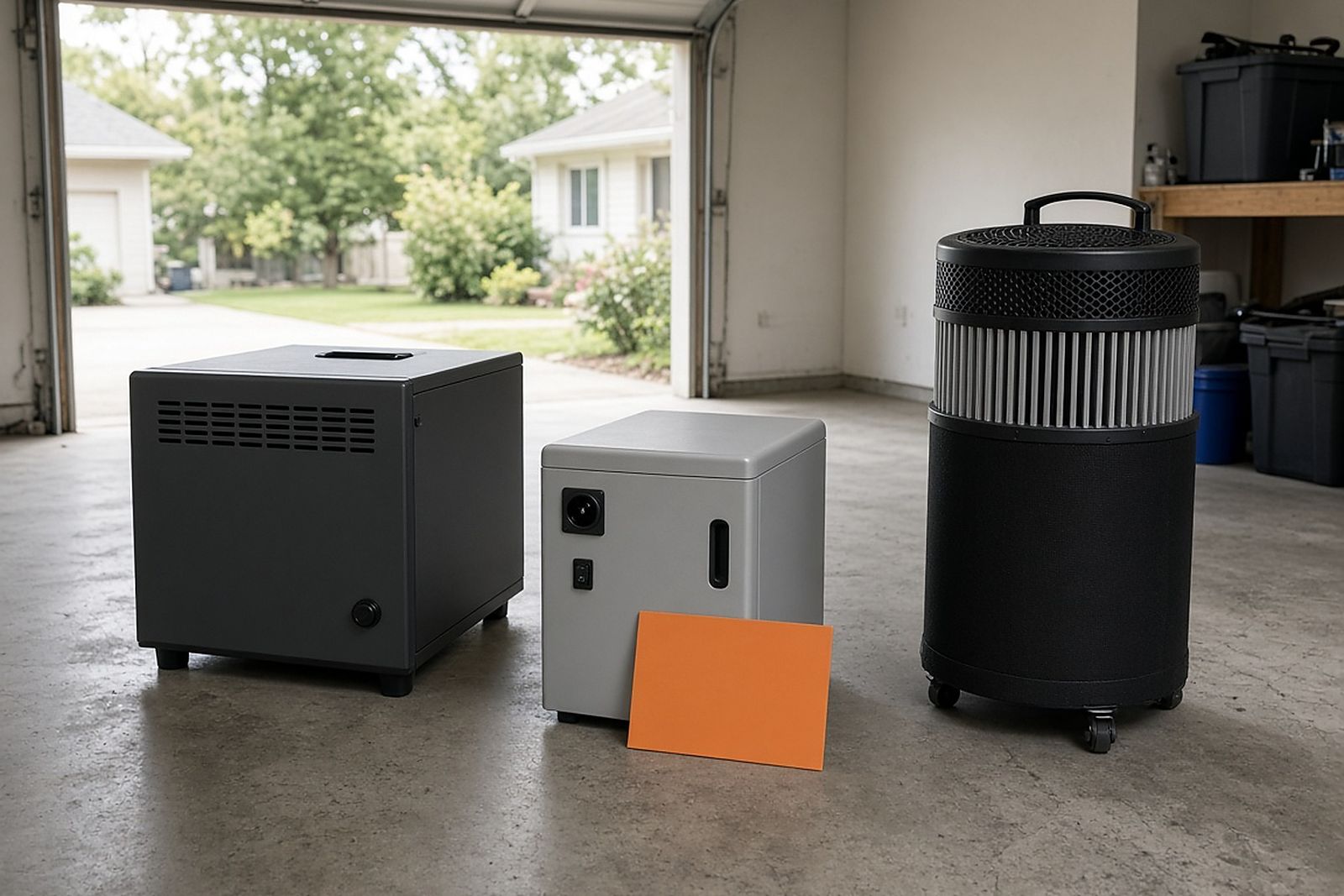
Hydroxyl generator, ozone unit with a warning card and a carbon filter unit staged in a garage
Illustrative photo, not a job record. Hydroxyl generator, ozone unit with a warning card and a carbon filter unit staged in a garage.

Odor Removal facts the quiz draws on

2.21

Stronger liquid-sludge odor was associated with skin-rash reports (PR 2.21; 95% CI 1.13–4.32).

Read with care: Self-reported odor/symptoms; most symptom-group scores were similar across exposure groups.

Source: Wing et al. (2014)431 adults near liquid-sludge, cake-sludge or comparison areas.

0.01-1.5 ppm

OSHA lists the hydrogen sulfide odor threshold at 0.01 to 1.5 ppm, while loss of smell (olfactory fatigue) occurs at 100 to 150 ppm.

Read with care: Thresholds vary by individual and the smell disappearing at high levels means odor is an unreliable safety indicator.

Source: OSHA (2024)US occupational guidance; sewer gas and decomposition environments

2 to 5 times

EPA reports that levels of several organic compounds average 2 to 5 times higher indoors than outdoors, and some VOCs run up to ten times higher indoors.

Read with care: A general indoor-air finding not specific to odor-affected homes or any particular contaminant.

Source: EPA (2024)US homes; EPA summary of indoor air research

99.97%

EPA defines a HEPA filter as one that removes at least 99.97% of airborne particles at 0.3 microns, the most penetrating particle size.

Read with care: HEPA captures particles such as soot but does not remove gaseous odor molecules, which need carbon or oxidation.

Source: EPA (2024)US EPA definition for air filtration

These figures are public research and agency data, not this network's own job records. Keep each number with its population, year and limits; none of them predicts cost, timing or outcome at a specific property.

Questions about the odor removal quiz

What score means I am ready to hire someone?

There is no formal passing grade. The quiz is a self-check. If you miss questions about finding the source or ozone safety, read those study guide sections before you talk to providers. Those topics are where sales pitches most often mislead. If you answer most questions right, you are likely ready to judge a written scope of work. You should also be able to notice when a plan skips the step of finding the source.

Does the quiz cover chemical and drug-related odors?

It touches on them as a kind of odor that should be treated as a possible hazard, not a cleaning problem. Solvent, ammonia-like, or strange chemical smells can point to residues that need testing and expert cleanup, not deodorizing. The quiz asks you to spot that difference. Detailed advice on testing for chemical residue is on other sites in this network.

Can I retake the quiz?

Yes, as many times as you like. Questions may show up in a different order when you retake it. Retaking it after you read the study guide is a good way to check that the ideas stuck. Some readers take it once before contacting a provider and again after getting a written plan. That shows whether the plan matches what they now know to expect.

Why is there so much emphasis on humidity?

Because moisture is what brings a hidden odor back. Odor chemicals trapped in pad, drywall, or framing come out more easily when the air is warm and damp. That is why a house that seemed fine in winter smells again in summer. Knowing this helps you judge a job. A final check on a dry day proves less than one after the weather has turned humid.

Is the quiz useful for landlords and property managers?

Yes. Several questions cover rental turnovers, smoke residue, and who has the right to approve removal work. Managers who know the difference between repainting and cleaning residue are in a better spot. They can set turnover budgets and explain charges to tenants who are moving out. The study guide section on who can approve work is most useful for buildings with many units, where a source may be in the unit next door.

Do I need to know product names or brands?

No. The quiz focuses on types of methods, not any one product. Those types include enzyme treatment, machines that break down odor, residue cleaning, and removing material. Brand names change and product labels differ. What matters is whether the method fits the odor type and whether people are living in the space. It also matters whether a provider can explain that fit in plain words.

What if my situation involves a death or biohazard?

Then the odor is a sign of contamination that must be cleaned up first, under biohazard safety rules. This quiz is only part of what you need. The network's trauma and unattended-death sites cover that work in detail. Odor treatment put over a source of body fluids that has not been cleaned up gives only a short-term result. It can also expose the people who come back into the space.

What other visitors think

Poll results

Every count is a real visitor vote; nothing is seeded or padded. One vote per poll per device, and you can change your answer.

Your experience

When a persistent smell first appeared in your home, what did you try first?

No visitor votes yet
General

How long did you live with a recurring odor before seeking outside help?

No visitor votes yet