Short answer
Commercial and residential odor removal follow the same principle, find and remove the source, but they differ in scale, ventilation, scheduling, and who must be protected. Commercial jobs usually involve larger air handling systems, workers and customers who stay nearby, after-hours schedules, and more documentation for owners and tenants. Home jobs focus more on personal belongings, family routines, and a smaller, more personal set of decisions.
Same science, different setting
The science is the same. Every odor comes from molecules released by a source, and lasting results depend on removing, cleaning, or sealing that source before treating the air. What changes between a house and a business is almost everything around that science.
In a home, you usually have one decision maker, a few rooms, one heating and cooling system, and belongings that carry personal value. In a commercial building, you may have a landlord, a tenant, a property manager, and a corporate office all weighing in. The space may run on a rooftop air handler serving many suites, and the people nearby are employees, customers, or guests who expect business as usual.
Understanding those differences helps you choose the right provider and set realistic expectations about timing, cost drivers, and results.
Where commercial odors come from
Commercial sources often come from the building's use. Restaurants deal with grease buildup in hoods, ducts, and floor drains, plus spoiled product from refrigeration failures. Offices see odors from dried-out plumbing traps, mold after roof leaks, and occasionally a sewage backup in shared restrooms. Hotels handle smoking in nonsmoking rooms, pet accidents, and the rare death in a guest room.
Retail spaces can inherit smells from a previous tenant, such as a nail salon, a pet store, or a smoke shop, soaked into drywall, ceiling tile, and flooring. Warehouses face spilled product, rodent activity, and diesel exhaust. Medical and dental offices deal with chemical odors and biological waste areas.
Many of these sources are repeatable. A grease trap or a floor drain will produce odor again unless maintenance changes, so commercial odor work often ends with a prevention plan rather than a single fix.
The usual home odor problems
Residential jobs tend to center on the people and animals who live there. Pet urine in carpet and subfloor, long-term indoor smoking, cooking residue, and musty basements lead the list. Less often, homes need odor work after a fire, a sewage backup, a hoarding situation, or an unattended death.
Home jobs also involve belongings. Clothing, bedding, upholstered furniture, books, and keepsakes can hold odor, and each one carries a decision about cleaning, storing, or letting go. A good residential provider helps you sort those choices without pressure.
Because families often stay in the home during work, the plan has to account for where people sleep, how pets will be protected, and how to keep children away from equipment and treated areas.
Home jobs also carry an emotional side that commercial work rarely does. A smell tied to a parent who smoked for decades, a pet that recently died, or a relative who passed away in the home can make every decision harder. A residential provider who moves at your pace, explains choices plainly, and lets you step away when needed is worth seeking out.
How do ventilation systems change the approach?
A typical house has one forced-air system with a filter near the furnace and a limited run of ducts. Odor in that system is usually addressed by replacing the filter, cleaning accessible components, and running the fan through the treatment period.
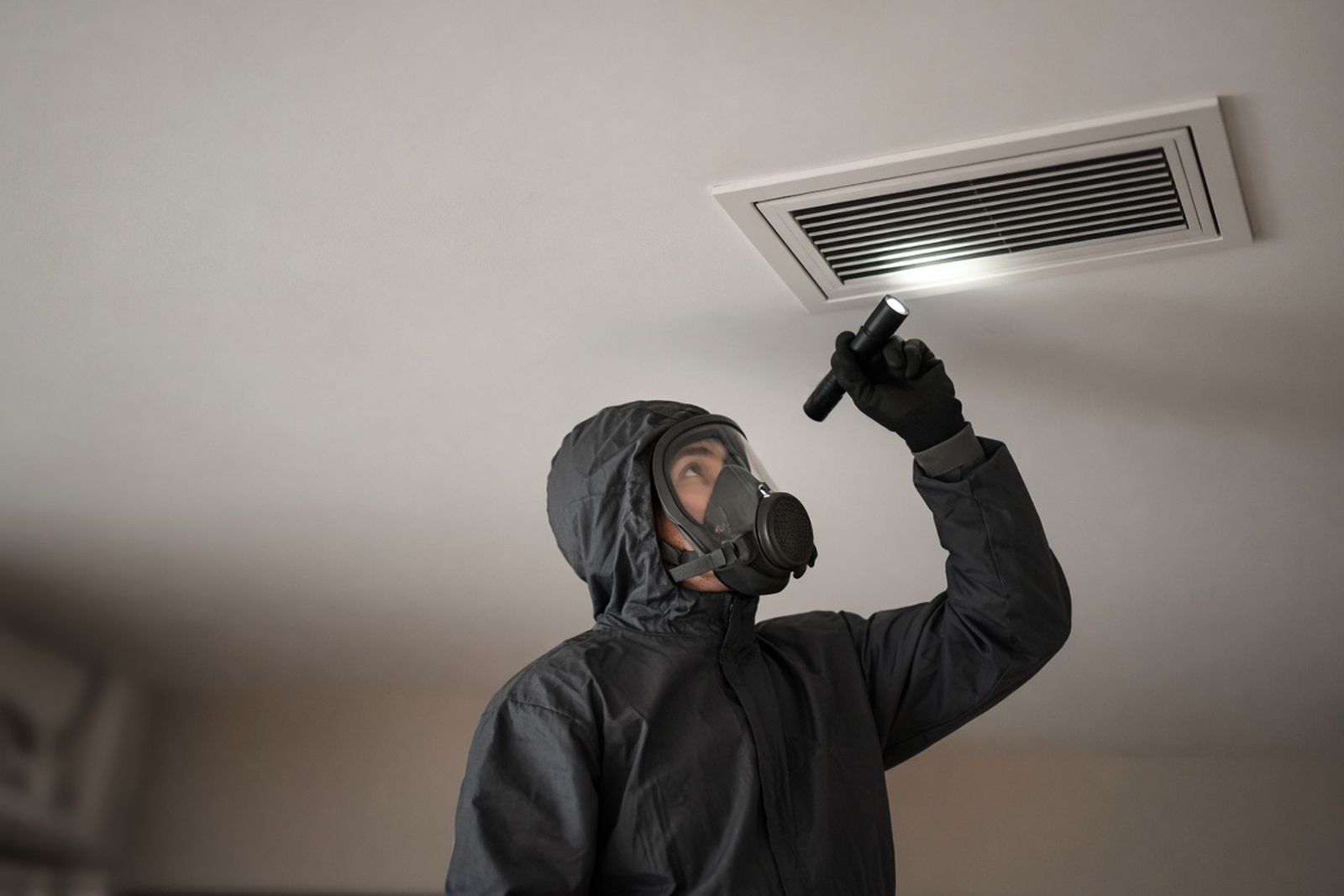
Commercial HVAC is larger and more complex. Rooftop units, variable air volume boxes, return plenums above drop ceilings, and makeup air for kitchens all move odor in ways that may not be obvious. A smell in one suite can come from a neighbor through a shared return plenum. Treating the suite without addressing the plenum rarely works.
Indoor air already carries more than people realize. EPA reports that levels of several organic compounds average 2 to 5 times higher indoors than outdoors, and some VOCs run up to ten times higher indoors, according to its 2024 guidance. In a large building, ventilation rates and filtration play a big role in how quickly odor compounds clear once the source is gone.
Commercial jobs often need an HVAC contractor on the team. Ask whether the odor provider coordinates with one or expects you to arrange it separately.
Protecting occupants, workers, and neighbors
In a home, the people at risk are household members, visitors, and pets. Treatments with strong chemicals or ozone require them to leave, and a provider should explain when they can return.
In a business, the list grows. Employees, customers, neighboring tenants, and the provider's own workers all need to be considered. Employers must protect workers from chemical exposures on the job. OSHA sets a permissible exposure limit for ozone that employers must keep workers under. That is one reason ozone treatments in commercial settings happen after hours, in sealed areas, with a clear plan for airing out before anyone returns.
Neighboring suites in a strip center or office building share walls, ceilings, and sometimes air. A professional provider will ask about adjacent occupants and plan to keep treatment chemicals and odors from traveling to them.
Scheduling and downtime
Homeowners usually want the job done quickly but can often arrange to stay elsewhere for a few days. Commercial clients may be losing revenue every hour the space is closed, so they ask for night and weekend work, phased schedules, or partial reopening.
Phasing works well when the source is limited to one area. A restaurant might close the dining room for two nights while the kitchen stays open, or a hotel might take a single floor offline. It works less well when the source is in shared ventilation, since treating one zone at a time can let odor drift back.
Ask the provider to explain which steps can be phased and which need the whole space. Clear expectations prevent a situation where the business reopens early and the smell returns before the work is complete.
Weather and building systems also affect timing. A home can often be closed up and warmed for a verification test on short notice. A commercial building may run on a programmed HVAC schedule that shuts down at night, so the provider may need building engineering to override settings during treatment and testing. Plan those requests in advance so the verification step does not slip.
Side by side: a flooded basement and a failed cooler (illustrative)
The two jobs below are illustrative composites, not real clients, set in the same week. The first is a family home where a sewer line backed up into a finished basement while the owners were away. The second is a small café whose walk-in cooler failed over a holiday weekend.
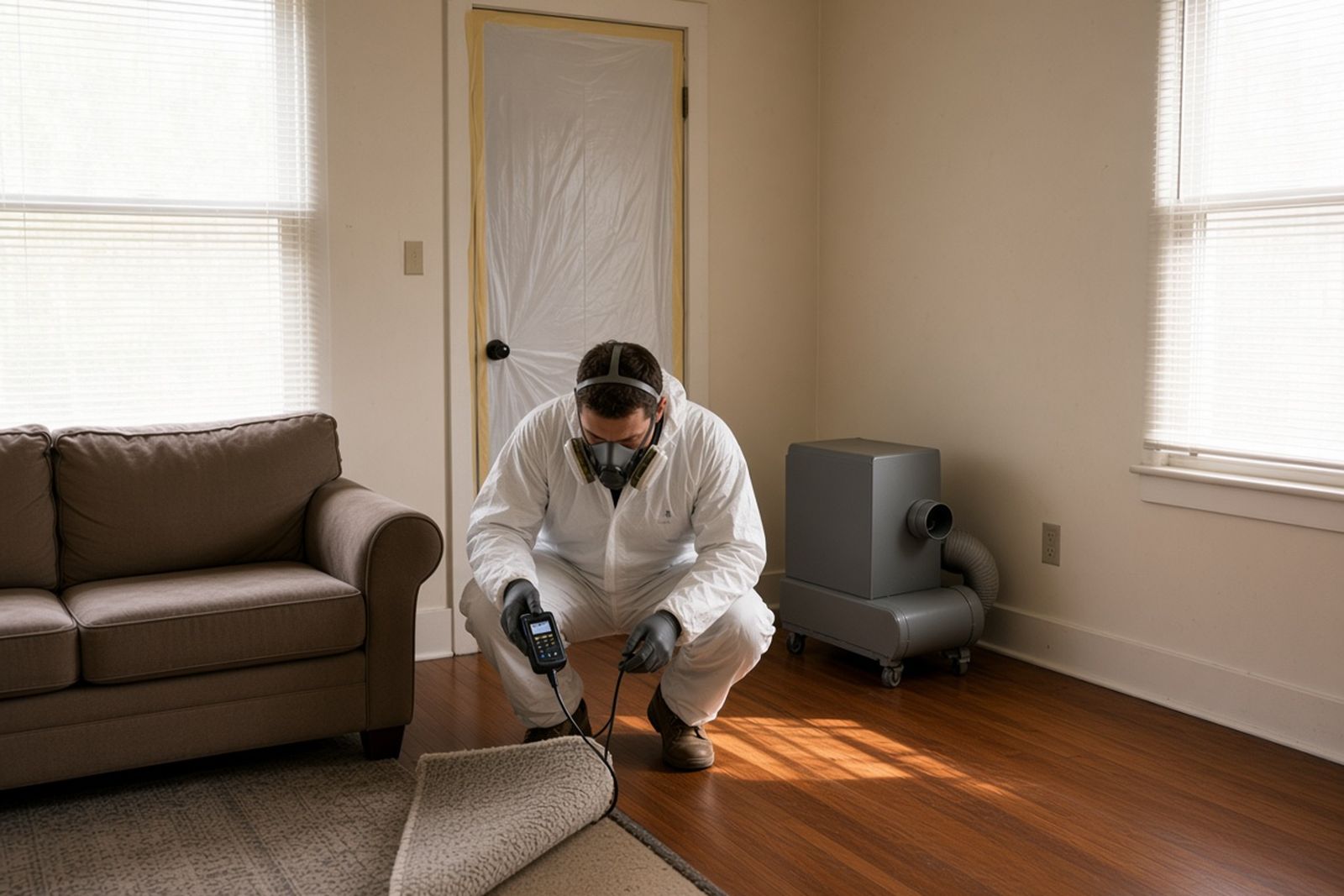
At the home, the provider removes wet carpet, pad, and lower drywall, cleans and disinfects the slab and framing, dries the area, and runs carbon filtration. The family stays with relatives for several days. The main decisions are about stored boxes and a sofa that sat in the water.
At the café, spoiled product is removed from the cooler, the cooler interior and floor drain are cleaned, and the odor is traced to fluid that ran under the cooler threshold into a seam in the kitchen floor. That seam is cleaned and sealed overnight so the café can open for breakfast. The owner also needs documentation for the health inspector, and the provider coordinates with a refrigeration technician and the landlord's HVAC contractor because the kitchen exhaust shares a roof curb with the neighboring suite.
Both jobs follow the same logic. They differ in who is affected, when work can happen, and who needs paperwork.
Paperwork each setting needs
Homeowners benefit from photos, a written scope, and an invoice, especially if insurance is involved or the home will be sold. Keep those records with your property file.
Commercial clients usually need more. Landlords may want proof that the tenant addressed a problem. Franchise owners may report to corporate. Food businesses may need records for health inspectors. Hotels may need documentation of rooms taken out of service. Insurance claims often require itemized scopes, moisture logs, and before and after photos.
Leases add another layer. Many commercial leases assign responsibility for odor-causing conditions, such as grease buildup or plumbing maintenance, to one party. Written scopes that name the source and its location make it easier to sort out who pays and to avoid disputes at lease renewal or move-out.
Ask any commercial provider for samples of their documentation before hiring. The quality of the paperwork often reflects the quality of the work.
How do I choose the right provider for my setting?
For a home, look for a provider who explains sources clearly, respects your belongings and schedule, and offers a verification plan you understand. Experience with your specific problem, whether pets, smoke, or a death, matters more than size.
For a business, add questions about after-hours availability, coordination with HVAC and building management, worker protection, liability coverage, and documentation. Ask for references from similar businesses.
In either setting, be cautious of anyone who proposes air treatment alone. Disposal of contaminated materials, especially sewage-soaked items or food waste, may be regulated. Ask the provider where those materials will go and whether your city or county solid waste agency needs to approve the disposal.