Short answer
Compare local and national odor removal providers on the same practical points: who will actually inspect and do the work, how they find the source, what the written scope includes, how results are verified, and what happens if the smell returns. National brands may offer consistent systems and capacity, while local specialists may offer more direct attention. Individual crew skill matters more than company size.
Independent, franchise, branch, or broker: the real differences
Odor removal is offered by several kinds of businesses. Some are independent local companies, often owned by someone who started as a technician. Some are franchise locations of a national brand, locally owned but operating under shared branding, training, and systems. Others are corporate-owned branches of larger restoration companies, and some national networks act as brokers that pass jobs to local subcontractors.
Those structures affect how a job is sold, scheduled, and managed. They do not automatically decide how well your odor is removed. The person who walks through your home, finds the source, and chooses what to remove has far more influence on the result than the logo on the truck.
It also helps to know that the same brand can vary a lot from one territory to the next. A franchise location is usually run by a local owner who hires and trains their own staff within the brand's framework. Two locations with the same name may have very different levels of experience with odor work, particularly with difficult sources such as decomposition, hoarding, or long-term smoking.
The goal of comparing providers is to find out who that person will be and how they work, whatever kind of business sends them.
Where local independents tend to shine
Independent providers are often small enough that the owner or a senior technician does the inspection personally. You may speak with the same person from first call to final walk-through, which makes communication simpler and accountability clearer.
Local companies also tend to know the housing stock in their area. A technician who has worked in dozens of homes from the same era may recognize common problems quickly, such as a crawlspace design that traps moisture or a style of subfloor that absorbs pet urine.
Their reputation lives or dies in the community. Word of mouth, local reviews, and repeat business from property managers and real estate agents give them strong reasons to follow through.
The tradeoffs can include limited capacity during busy periods, fewer specialized machines, and less formal documentation. Some small companies are excellent at paperwork. Others are not, and that matters if you need records for insurance or a sale.
Where national brands tend to shine
National brands and large restoration companies usually have standardized training programs, written procedures, and quality checks. That can create more consistency from job to job, especially in documentation and scheduling.
They may have more equipment and staff, which helps with large jobs, commercial properties, or situations where many units are affected at once. They often have established relationships with insurance carriers and property management companies, and they may be familiar with carrier documentation requirements.
Some national companies follow recognized industry standards closely, such as the IICRC's standards for fire and smoke restoration. A provider of any size can tell you whether it follows them for smoke and fire odor work.
The tradeoffs can include less flexibility, sales processes that emphasize package offerings, and a larger gap between the person who sells the job and the person who does it.
Who will actually do the work in my home?
This is the most important question for any provider. Ask whether the person who inspects your home will also supervise or perform the work. Ask whether technicians are employees or subcontractors, and if subcontractors, who they work for and how they are vetted.
Some national call centers take your information and pass the job to whichever local company is available. That company may be excellent, but you should know who they are before they arrive. Ask for the name of the company and the lead technician, and look them up.
Local companies can subcontract too, particularly for specialty tasks such as duct cleaning or drywall repair. That is normal, but you should know who is coming and who is responsible if something goes wrong.
Timing can change the answer. During storm season or after a regional flood, large companies often shift crews to water damage, and small companies may be booked for weeks. Ask what the realistic start date is and whether the crew assigned at signing will be the one that shows up.
Comparing how each finds the source
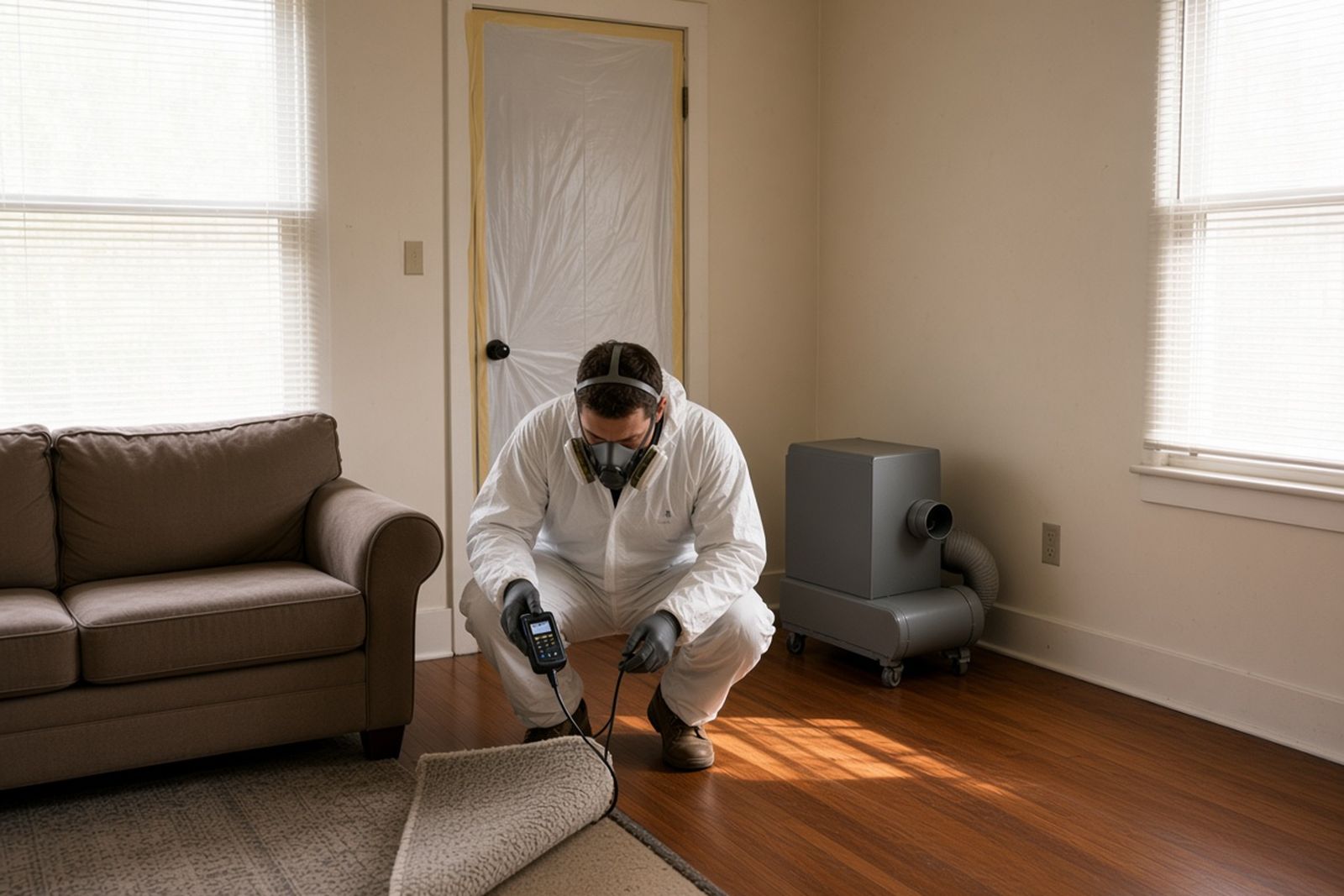
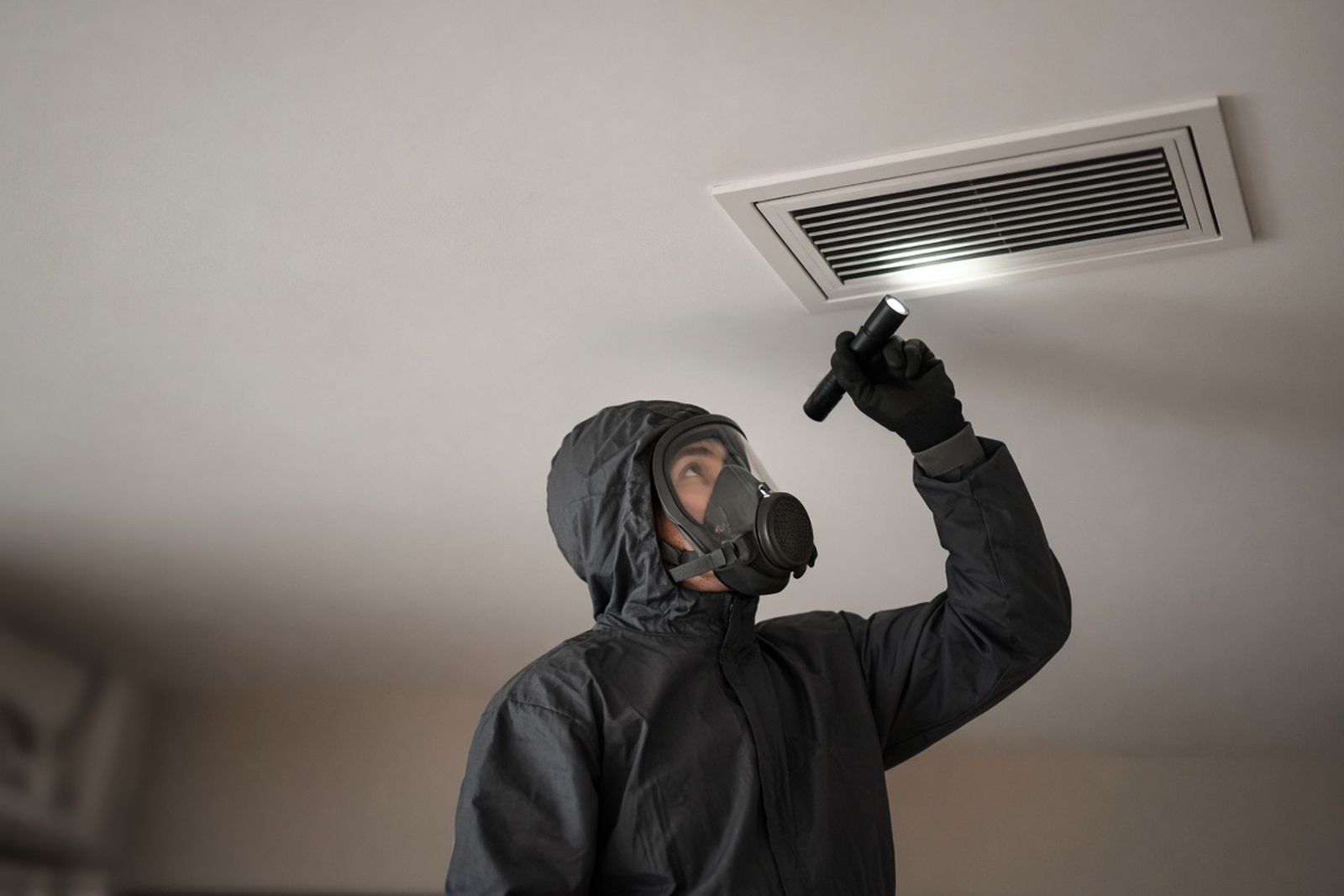
Ask each provider to describe how they will locate the source of your odor. Listen for specifics: moisture meters, UV lights, lifting carpet corners, checking HVAC components, and asking questions about when and where the smell is strongest.
Be cautious of any provider, local or national, who quotes a treatment before inspecting or who recommends the same package for every job. An ozone or fogging treatment offered sight unseen is a sign that the source may not be the focus.
A strong provider will explain their findings in plain terms and show you evidence, such as photos, meter readings, or a stain under UV. That habit protects you regardless of company size.
- Do they inspect before quoting?
- Which detection tools will they use?
- Will they show you what they found?
- Does the plan address the source before the air?
Scopes, paperwork, and follow-up
Ask every provider for a written scope that lists what will be removed, cleaned, sealed, and treated, with the reason for each. National companies may use standardized estimating software, which produces detailed line items familiar to insurers. Local companies may write more narrative scopes. Either can be clear or vague.
Compare scopes, not totals. A lower bid that skips source removal is not cheaper if the smell returns. A higher bid that includes subfloor sealing, duct cleaning, and a verification plan may be the better value.
Ask about documentation at the end: photos, moisture logs, disposal records, and a completion summary. If you need records for a sale, an insurance claim, or a tenant dispute, confirm the provider can supply them.
Pay attention to how each provider handles changes. Odor jobs often uncover more once carpet or drywall comes out. A clear process for photographing new findings and getting your approval before extra work begins protects you from surprise charges, whoever you hire.
Odor jobs sometimes need a return visit, especially when weather changes reveal a missed source. Ask each provider what their follow-up policy is and whether return visits are included for a period after the job.
National companies may have formal policies in writing. Local companies may handle follow-up more informally, which can work well if the owner is responsive. Either way, get the terms in writing.
Also ask who you will contact if there is a problem. A direct phone number for the project manager or owner is more useful than a general customer service line.
How the comparison often plays out
In practice, the two kinds of provider often differ less in what they find than in who shows up. A franchise estimator may be thorough and polite, measure every room, note the smoke film, and return a detailed line-item estimate within a day, while explaining that the crew will be assigned based on availability.
A local owner-operator may take a day longer to visit but inspect the same rooms personally, and may notice something a templated estimate misses, such as a heavily stained return vent that points to smoke residue in the ductwork. A finding like that changes the scope: duct cleaning in that branch, carbon filtration instead of ozone, and a closed-house smell test at the end.
Neither result is fixed. Raise one provider's findings with the other, and a good estimator will revise the scope. Once both scopes address the full source, the choice often comes down to whether you would rather deal with one person from start to finish or lean on a larger company's capacity and systems.
The bottom line
Neither local nor national is automatically better. Choose the provider whose inspection is most thorough, whose scope clearly targets the source, whose crew you know, and whose documentation and follow-up meet your needs.
If the odor is linked to a death in the home, ask whether the provider handles the biohazard cleanup themselves or coordinates with a separate remediation company. Some odor specialists focus only on the deodorizing stage, while some restoration firms offer both. Knowing who is responsible for each step prevents gaps between contractors and spares you from repeating a painful story to several companies.
Check reviews and references for the specific location or company that will do your job, not just the brand as a whole. Confirm insurance coverage and any licenses your area requires. Disposal of contaminated materials, especially after sewage or biological events, may be regulated, so ask each provider where and how it disposes of them.