Short answer
Before hiring an odor removal company, ask how it will find the source, what it will remove versus treat, which air treatment it uses and why, how long you must stay out, what training its crew has, how the result is verified, and what happens if the smell returns. Clear, specific answers separate source-focused providers from companies selling masking.
Why the questions matter
Odor removal is one of the easiest services to oversell. A smell can fade for a week after almost any treatment, and by the time it returns, the company has been paid. The questions you ask before signing are your best protection.
Good providers welcome detailed questions because their answers show their process. Vague answers, pressure to start treatment immediately, or a price given before anyone has looked under a carpet are signs to slow down.
The ten questions below are grouped by stage of the job. You do not need to ask them word for word. What matters is that you come away knowing where the smell is coming from and exactly what the company plans to do about it.
Take notes during each conversation. When you compare providers later, your notes will be more useful than your memory of who sounded most confident.
Questions 1 and 2: finding the source and deciding what comes out
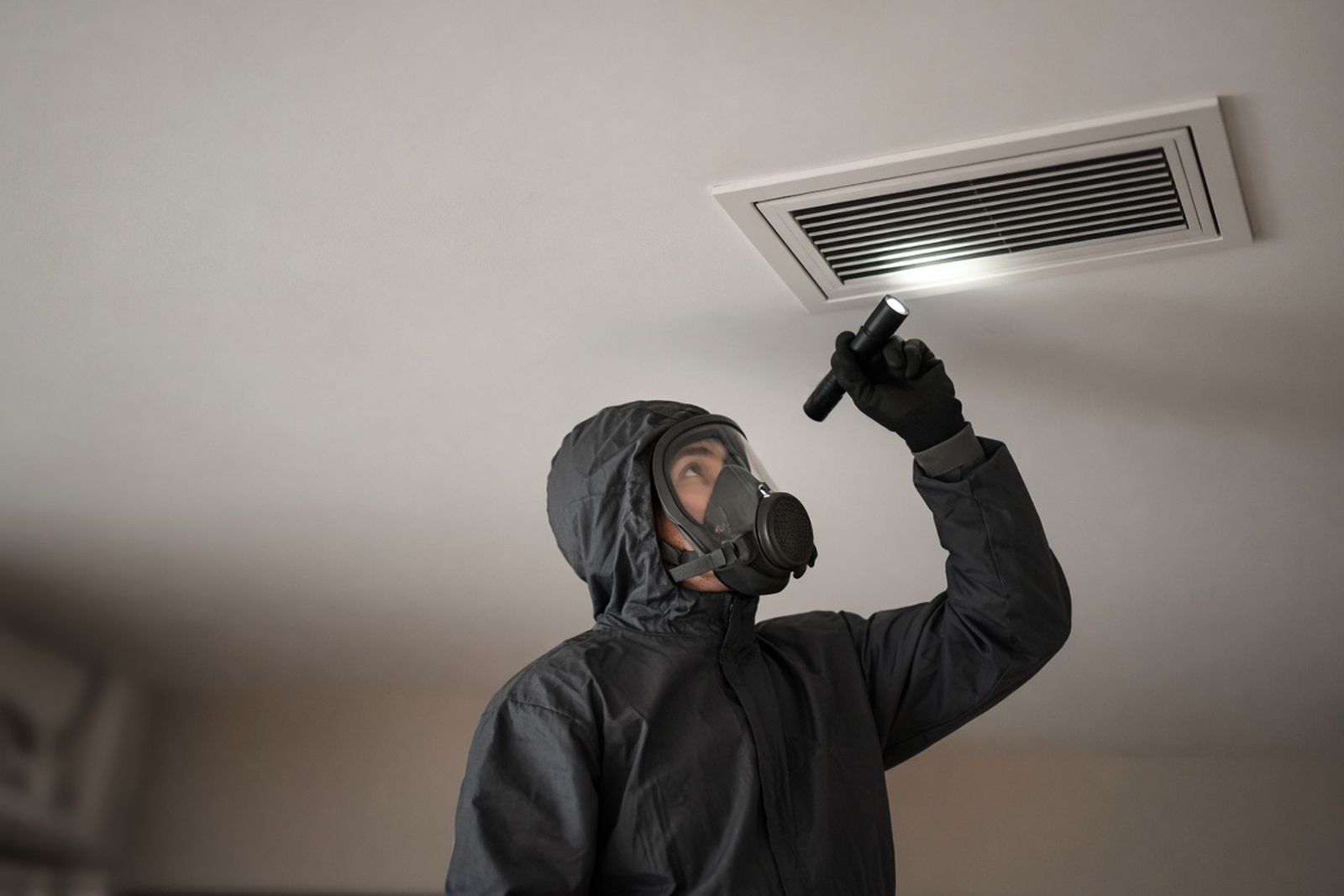
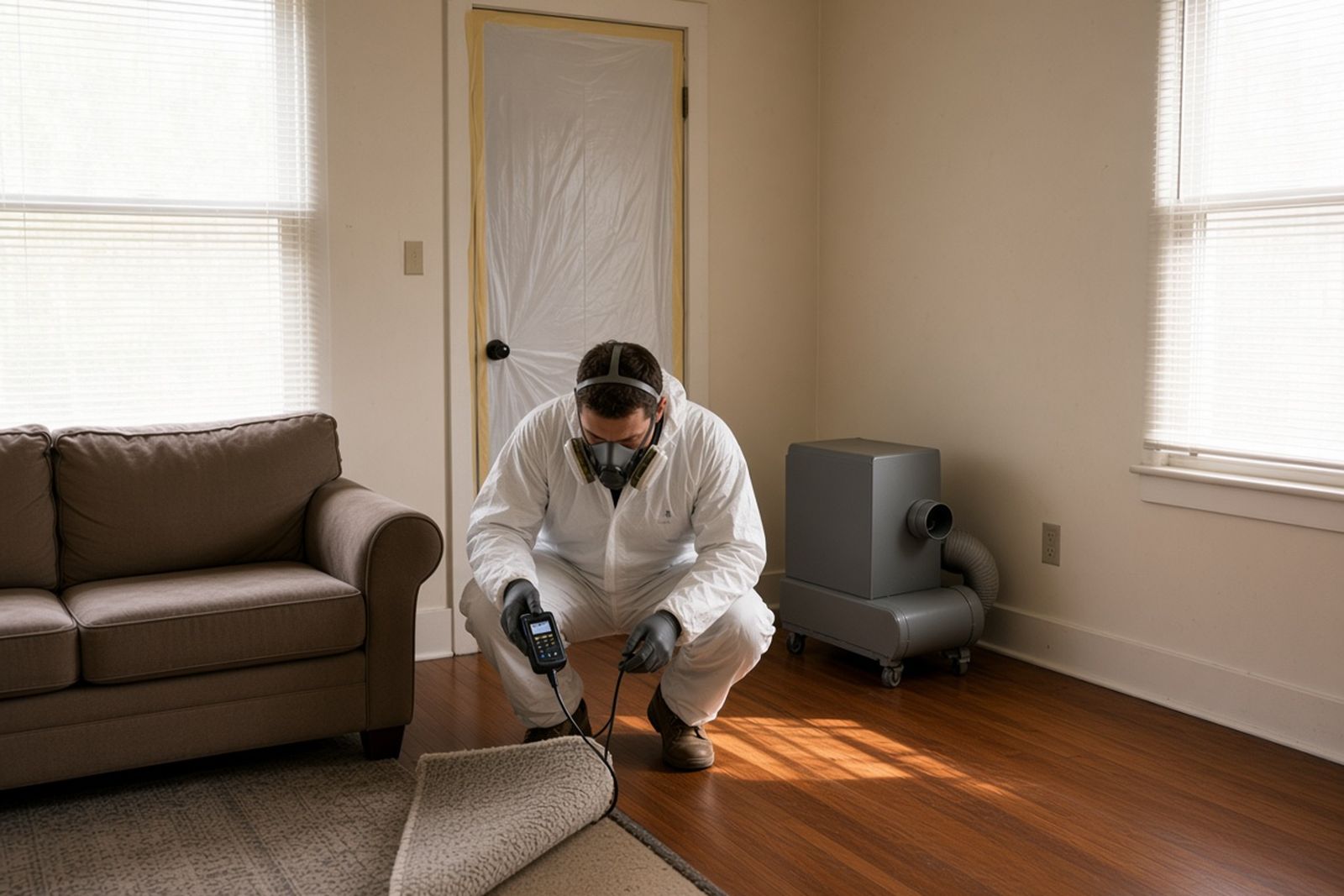
Question 1: How will you find the source? Listen for specifics. A strong answer mentions a walk-through, questions about the smell's history, and tools such as UV lights for urine, moisture meters for damp materials, and physical checks like lifting carpet or removing vent covers. A weak answer jumps straight to a machine.
Question 2: What will you remove, what will you clean, and what will you only treat? This single question reveals most of a provider's approach. Removal addresses the reservoir. Cleaning addresses residue. Treatment addresses what remains in the air. A scope that relies mainly on treatment may leave the source in place.
Ask the provider to explain its reasoning for each area. If it plans to leave carpet pad in place where a pet was confined, ask how it knows the pad is not holding urine.
Pay attention to whether the provider asks you questions too. A company that wants to know when the smell started, whether it changes with heat or rain, and what has already been tried is gathering the information it needs to find the source. One that never asks is probably planning the same treatment for every home.
Questions 3 and 4: air treatment and time away from home
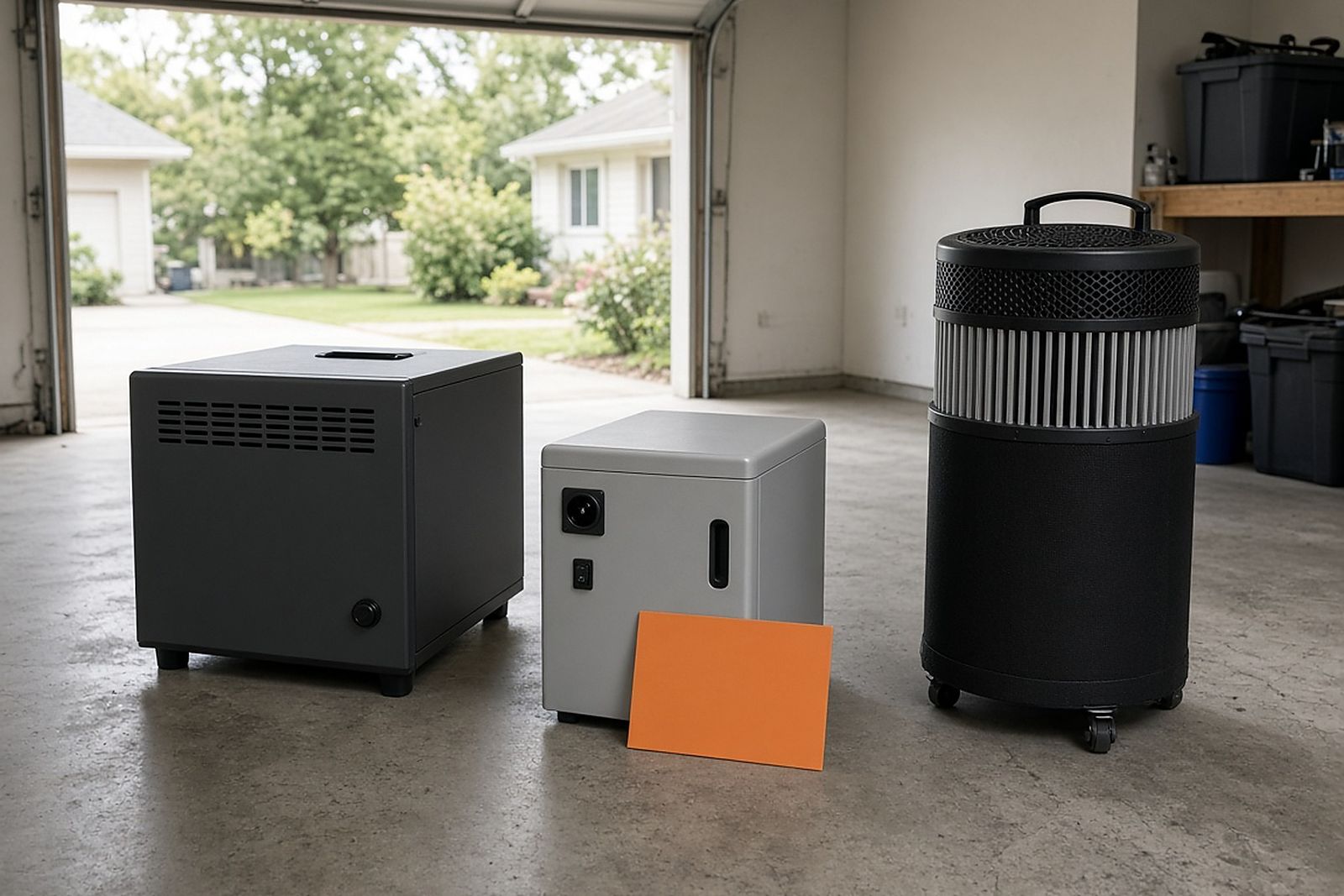
Question 3: Which air treatment will you use, and why that one? Common options include hydroxyl generators, thermal fogging, activated carbon filtration, and ozone. Each has tradeoffs, and a good provider explains why it chose one for your situation.
Be especially careful with ozone. EPA says activated carbon filters can be effective at removing gases and odors provided a large amount of carbon is used, and no federal agency has approved ozone-producing air cleaners for occupied spaces. Ozone can still have a place in vacant, controlled treatments, but it should never be run with people or pets present.
Question 4: Do we need to leave, and for how long? Ask how long people, pets, and plants must stay out, what the provider does to ventilate afterward, and how it confirms the space is ready. Also ask whether any materials in your home could be damaged by the treatment, such as rubber, certain fabrics, or artwork.
Questions 5 and 6: the crew and its training
Question 5: Who will be in my home, and what training do they have? Ask whether the crew is employed by the company or subcontracted, and what training or certifications they hold. Industry certifications such as those from the IICRC exist for odor control and fire and smoke restoration, but ask what each one covers rather than assuming.
Question 6: Can you handle biohazards if you find them? Some odors come from decomposition, sewage, or animal remains. Those situations call for bloodborne pathogen training, protective equipment, and regulated waste handling. If the company does not handle biohazards, ask whom it refers to and how the two companies coordinate.
Also ask about insurance. A company working inside your home should carry general liability coverage, and many clients ask for a certificate of insurance before work starts.
If a death occurred in the home, ask how the company approaches families in that situation. Discretion, unmarked vehicles on request, and a willingness to set aside personal items for review are signs of a provider that understands what you are going through.
Question 7: the written scope and price
Question 7: Will you give me a written scope with each area and action listed? A written scope lets you compare providers and holds everyone to the same plan. It should list each room, each material, and whether it will be removed, cleaned, sealed, or treated.
Ask what is excluded. Reconstruction after removal, contents cleaning, and HVAC work are common exclusions that can turn a modest quote into a larger project. Ask how the company handles change orders if hidden damage turns up.
Finally, ask how the price is structured. Some providers charge per room, some per square foot, some by the hour, and some a flat fee. Any structure can be fair if you understand it.
- The confirmed or suspected source and how it was identified
- Each area with its planned action: remove, clean, seal, or treat
- Contents, HVAC, and reconstruction, listed as included or excluded
- Air treatment method, duration, and vacancy requirements
- The verification step and any follow-up visit
Questions 8 and 9: proof that it worked, and what happens if it returns
Question 8: How will you show me the odor is gone? A good answer describes a verification step, such as a closed-room check after the space has sat overnight, a moisture reading on treated materials, or a scheduled return visit once weather warms.
Question 9: What happens if the smell returns? Ask whether the company will return at no charge within a certain window, how it defines a return, and what it will do differently. A provider that stands behind its source work usually has a clear answer.
Be wary of guarantees that sound unlimited. An honest provider may explain that some hidden sources can only be confirmed by opening walls or floors, and that a guarantee depends on the agreed scope.
Write down each provider's answer to these two questions in particular. They are the easiest to forget and the most important to hold a company to if the odor reappears months later.
Question 10: paperwork for an insurer, landlord, or buyer
Question 10: Can you provide documentation for my insurer, landlord, or buyer? Photos, a written scope, invoices, and a record of verification help in many situations: an insurance claim after a fire, a security deposit dispute, or disclosure when selling a home.
Ask whether the company will communicate directly with your adjuster and what forms it may ask you to sign. Read any direction-to-pay or assignment form carefully. A provider can document damage but cannot guarantee what an insurer will approve.
If you are selling, ask your real estate agent or attorney what your state's seller disclosure form requires you to report.
Good answers in practice: an illustrative case
To illustrate, take a made-up family whose basement smells musty and faintly of sewage after spring rains. They call three companies.
The first quotes a price by phone and offers to run ozone the next day. The second visits, finds a dry floor drain trap and damp drywall behind a finished wall, and proposes refilling the trap, removing the wet drywall, drying the cavity, treating the framing, and running a dehumidifier before any air treatment. The third visits but will not answer questions about what it plans to remove.
The family asks the second company all ten questions. It explains that the drain trap likely accounts for the sewage smell and that the musty odor comes from the wet wall, and it offers a return visit after the next heavy rain. They hire the second company and keep the scope for their records.
Red flags that should end the conversation
Some answers should end the conversation. You are not obligated to hire anyone who makes you uneasy.
Trust your own reaction as well. If a provider dismisses your questions, talks over you, or treats the smell as your fault, that attitude is likely to continue once the job starts. Odor work often involves sensitive situations, from a loved one's death to a hoarded home, and you deserve a provider who treats the situation with patience and respect.
- A price quoted before anyone has seen the space or reviewed detailed photos
- Plans to run ozone while people or pets are in the home
- No written scope, or a scope that says only deodorize
- Pressure to sign immediately or pay in full before work begins
- Promises that insurance will definitely pay
- Refusal to explain what will be removed and why