Short answer
Environmentally responsible odor removal starts with accurate diagnosis, because treating the real source uses fewer products and fewer repeat visits. It favors targeted removal over blanket demolition, cleaning and sealing over fragrance, filtration over unnecessary oxidizing gases, and careful handling of wastewater and discarded materials. Ask providers how they choose products, limit landfill waste, protect indoor air, and dispose of contaminated items.
Why the environment matters in an odor job
Odor removal can look like a small, contained service: one room, one smell, one afternoon. Added up across thousands of homes and businesses, though, it involves a lot of chemical products, a lot of discarded carpet and drywall, and a lot of rinse water going down drains.
The environmental footprint of an odor job also includes the air inside the building. Some treatments add chemicals to indoor air that linger after the smell is gone. Others create byproducts. A job that removes an odor but leaves the air harder to breathe has not really succeeded.
The good news is that the most responsible approach and the most effective approach usually line up. Finding and dealing with the source uses less product, produces less waste, and holds up longer than repeated treatments aimed at the air.
Accurate diagnosis cuts waste
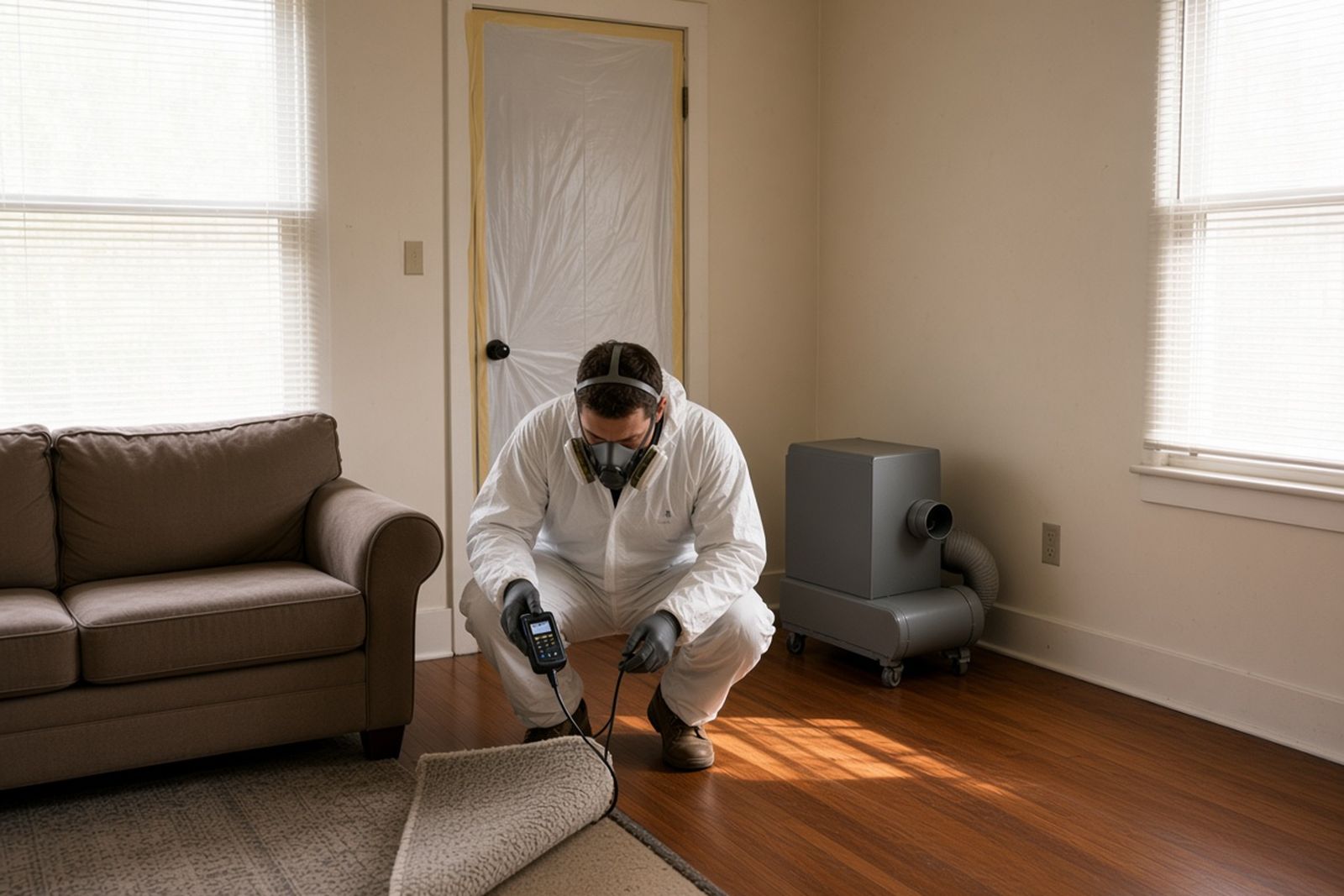
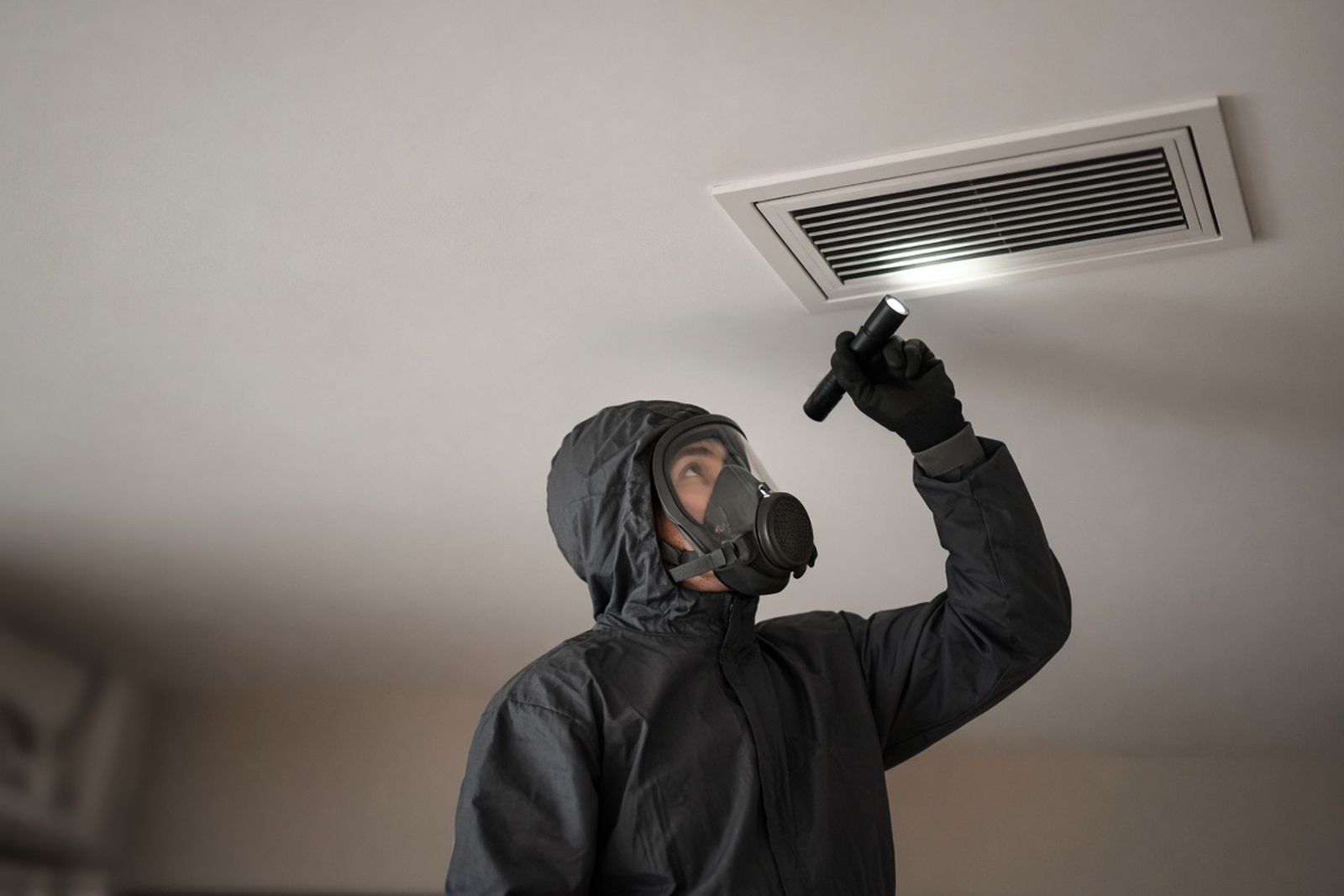
Every repeat visit means more product, more fuel, and often more material torn out. Many repeat visits happen because the first visit treated symptoms instead of the source. A careful inspection with moisture meters, UV lights, and methodical smell tests is the single biggest step toward a lighter footprint.
Diagnosis also prevents over-demolition. If a technician can show that pet urine reached the pad and subfloor in two spots, those spots can be treated or replaced instead of stripping every floor in the house. If smoke residue sits on painted walls but has not penetrated the drywall, cleaning and sealing may be enough.
Precise diagnosis also protects the building itself. Every section of drywall or subfloor that stays in place keeps its embodied materials, avoids new manufacturing, and spares the owner the cost and disruption of reconstruction. Targeted work is not a shortcut when the evidence supports it; it is the more careful option.
Ask any provider to walk you through what they found and where. A clear map of sources is a sign that the rest of the plan will be targeted rather than wasteful.
Choosing products responsibly
Product choice starts with matching chemistry to the source. Enzyme products break down organic residue from urine, vomit, and food. Degreasing cleaners lift smoke film and cooking residue. Oxidizers change certain odor molecules. Primers and sealers encapsulate residue that stays behind. Using the right one means using less of it.
Responsible providers read and follow labels, measure dilutions instead of guessing, and avoid layering several strong chemicals in the same space where they could react. They choose lower-toxicity options when those will do the job and save stronger products for situations that truly need them.
Fragrance products deserve special scrutiny. They add compounds to indoor air without removing the source, and they often mean more product will be sprayed again later. A provider who relies heavily on scent is usually adding to the chemical load rather than reducing it.
- Match the product to the source rather than using one product for everything
- Measure dilutions and respect dwell times
- Avoid mixing chemicals in enclosed spaces
- Prefer lower-toxicity products when they are effective
- Limit fragrance and masking agents
Is ozone an environmentally sound choice?
Ozone is often promoted as a chemical-free treatment because it is generated from oxygen on site. The reality is more complicated. Ozone is itself a lung irritant, and it reacts with some indoor compounds to form other byproducts.
It also does less than its reputation suggests. Ozone does nothing about a source that is still releasing odor, so a treatment can add a reactive gas to the building while the reservoir in the carpet or wall stays in place.
Professionals who do use ozone run it only in empty, sealed spaces, with a plan for airing out before anyone returns.
In many jobs, carbon filtration and ventilation after source removal achieve the same goal with fewer tradeoffs. Ask the provider why ozone is needed in your case before agreeing to it.
Removed materials: carpet, drywall, and the rest
Removed materials are the largest physical waste stream in odor work. Carpet, pad, drywall, ceiling tile, insulation, and upholstered furniture take up landfill space, and some of it could be avoided with more precise removal.
Some materials can be cleaned and kept. Solid wood furniture, hard flooring, cabinets, and many hard goods respond well to cleaning. Clothing and linens often wash successfully. Asking which items truly need to go helps you avoid discarding things that could be saved.
Some materials have recycling paths in certain areas, such as clean carpet pad or metal fixtures, though contaminated materials usually cannot be recycled. Materials soaked with sewage, bodily fluids, or other biological contamination must be handled as the local rules require. Your county environmental health office or solid waste agency can say how those materials must be packaged and where they can go.
Where the rinse water goes
Cleaning generates wastewater. Extraction machines pull dirty water from carpet and upholstery. Wall washing produces buckets of rinse water with detergent and residue. After a sewage backup or biological event, that water may carry contaminants.
Responsible providers do not pour wastewater into storm drains, yard drains, or onto the ground. Storm drains usually lead directly to streams and lakes without treatment. Sanitary sewer connections are usually the right place for ordinary cleaning water, but local utilities may restrict certain chemicals or require pretreatment.
Ask how the provider handles wastewater, especially for commercial jobs or jobs involving sewage. A clear answer shows they have thought about it.
Low-moisture cleaning methods can help too. Controlled extraction, targeted spot treatment, and wiping with measured solution rather than flooding surfaces all reduce the volume of dirty water produced. They also shorten drying time, which lowers the chance of creating a new moisture problem while solving an old odor.
Moisture control prevents repeat odor and repeat waste
Many musty odors come from moisture that allows microbial growth. Fixing the moisture problem prevents the odor from returning and avoids a second round of tear-out and treatment.
EPA advises that indoor humidity should stay below 60 percent, ideally 30 to 50 percent, in its 2024 guide to mold and moisture. Keeping a building in that range reduces the conditions that feed musty smells. Dehumidifiers, working bath and kitchen fans, and prompt leak repair do more for long-term odor control than any deodorizer.
A responsible odor provider will point out moisture sources even if fixing them falls to a plumber, roofer, or HVAC contractor. That advice may seem outside the scope of an odor job, but it is what keeps the job from needing to be repeated.
What a lower-impact plan looks like
The difference between a broad plan and a targeted one is easiest to see on a common combination: a musty lower level plus faint pet odor in one bedroom. A broad plan removes all the carpet in the house, fogs every room, and runs ozone for several days.
A targeted plan starts with more inspection time. Moisture readings may trace the musty smell to a single exterior wall where a gutter downspout empties against the foundation, and UV light and a closer look may show the pet urine confined to one corner of the bedroom.
The work then narrows to match what was found. The downspout is extended away from the house. Damp drywall and the carpet and pad in that area come out, the wall is dried, and a dehumidifier runs until readings match unaffected areas. In the bedroom, the subfloor in that corner is treated with an enzyme product and sealed before new pad and carpet go down. Carbon filtration runs during the work, and no ozone is needed.
Done that way, far less material goes to the landfill and fewer chemicals enter the home's air. The real test comes in the next humid season, when a musty smell would return if the moisture source had been missed.
Questions to ask about environmental practices
Ask how they decide what to remove and what to save. Ask what products they plan to use and why each one fits the source. Ask whether they plan to use ozone or other gases and what alternatives exist. Ask how they handle wastewater and contaminated materials.
A provider who answers these questions clearly is likely to deliver a job that is both effective and considerate of the building and its surroundings. One who cannot explain their product choices, or relies mainly on fragrance and repeated air treatments, may be adding cost and chemical load without solving the problem.
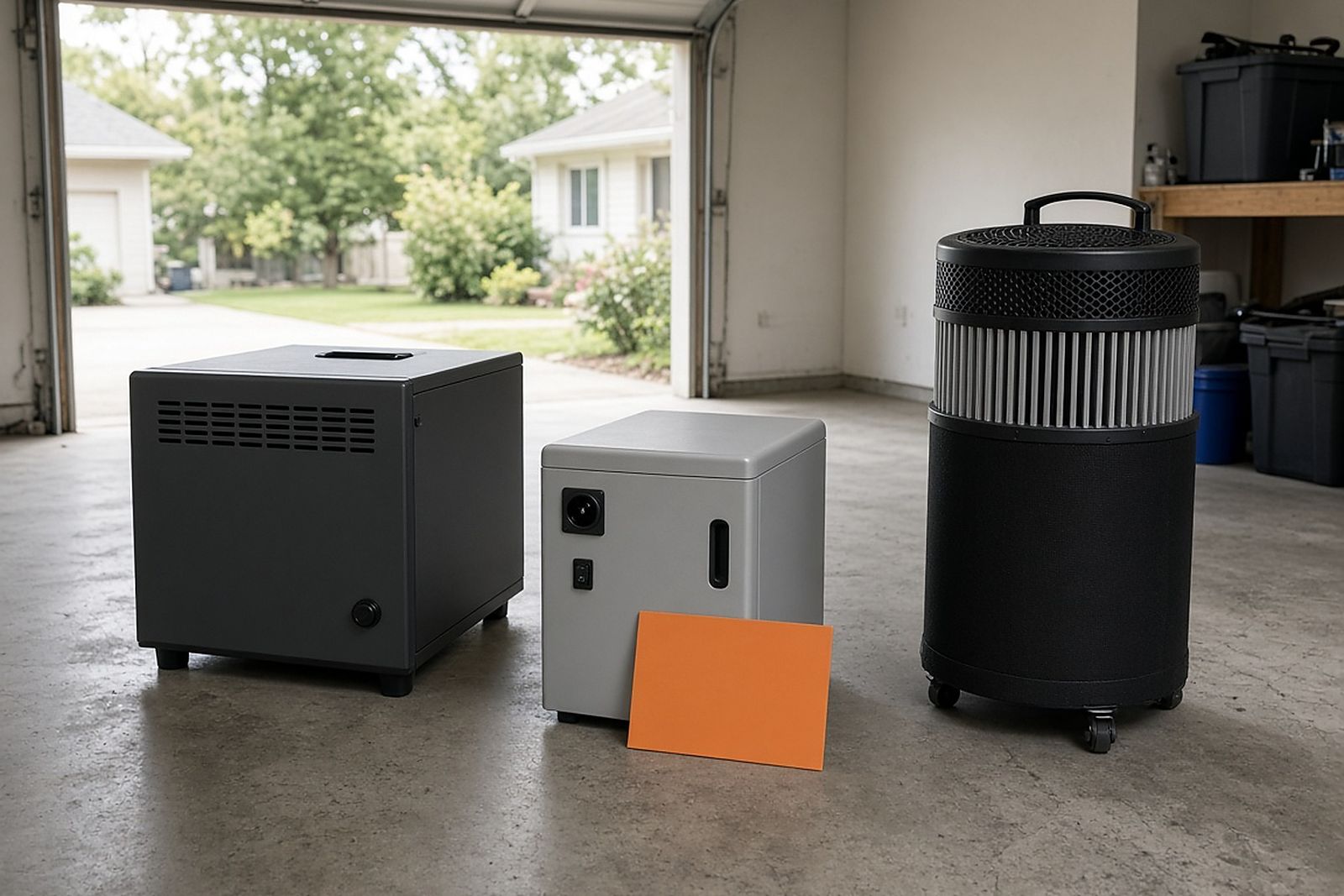
You can also ask about the provider's own operations. Do they reuse equipment such as air scrubbers and dehumidifiers rather than disposable devices? Do they replace carbon and HEPA filters on a schedule so machines work efficiently? Do they plan routes and visits to avoid extra trips? These details are small on any one job but add up over a year of work.