Short answer
Evaluate odor removal technology by asking what it does to the source, what it adds to the air, who must leave during use, and how results will be checked. Tools that find and remove sources, such as moisture meters, UV lights, and extraction equipment, usually matter more than air treatment machines. Filtration, oxidizers, and foggers are finishing tools, and each has limits providers should explain plainly.
Why is odor technology so hard to judge?
Odor removal is full of equipment with impressive names: hydroxyl generators, photocatalytic oxidizers, dry fog systems, thermal foggers, ionizers, ozone machines, and sensor packages that promise to measure air quality in real time. Marketing often describes each as a breakthrough.
The trouble is that smell is subjective and results depend on the source. A machine that seems to work in one house may do little in the next, because the first job had a small, surface-level source and the second had urine soaked into a subfloor. Without context, testimonials and before and after photos cannot tell you much.
A better approach is to sort technology by what job it does. Some tools help find the source. Some help remove or clean it. Some treat the air after the source is gone. Knowing which category a tool belongs to tells you how much weight to put on it.
Tools that find and remove the source
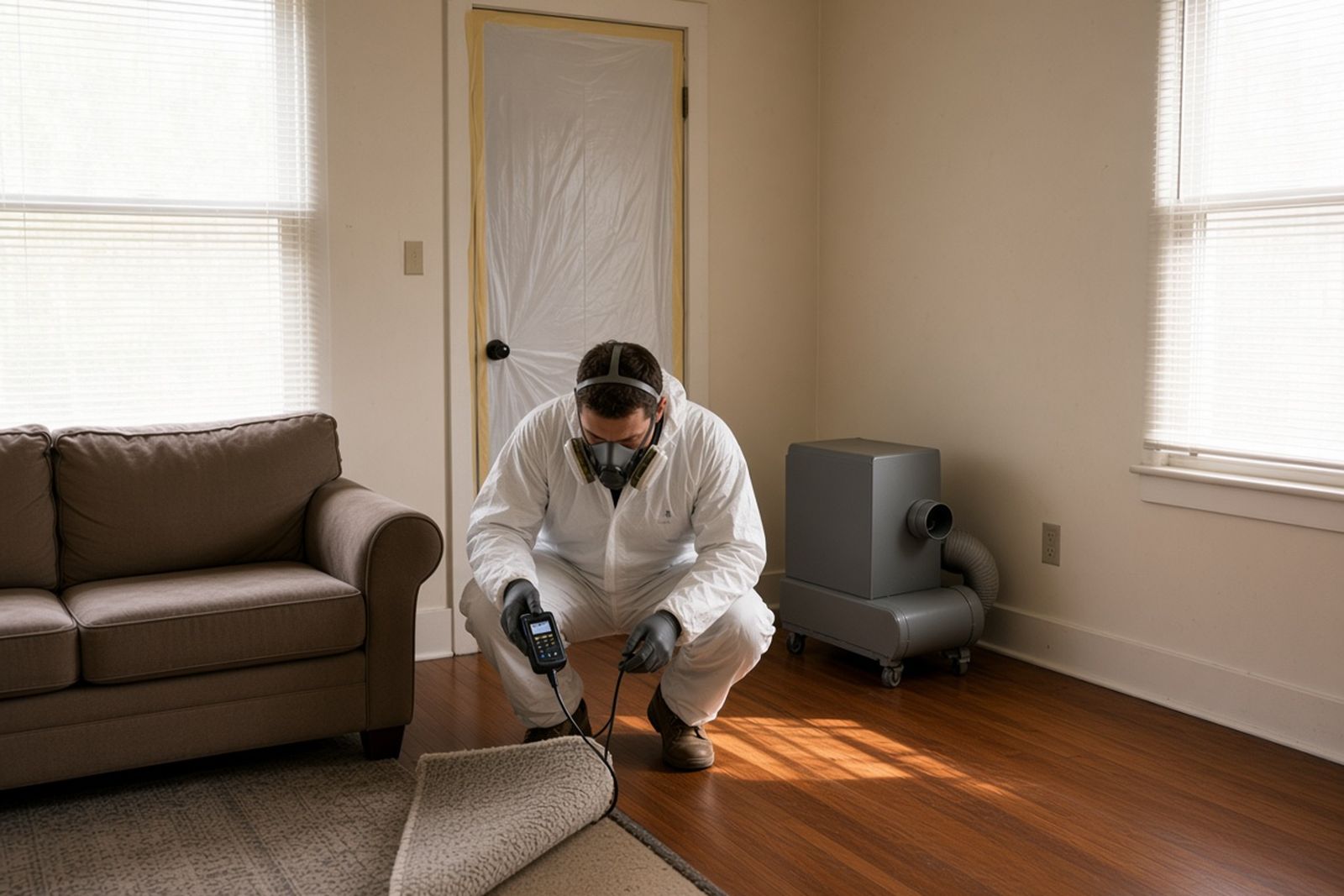
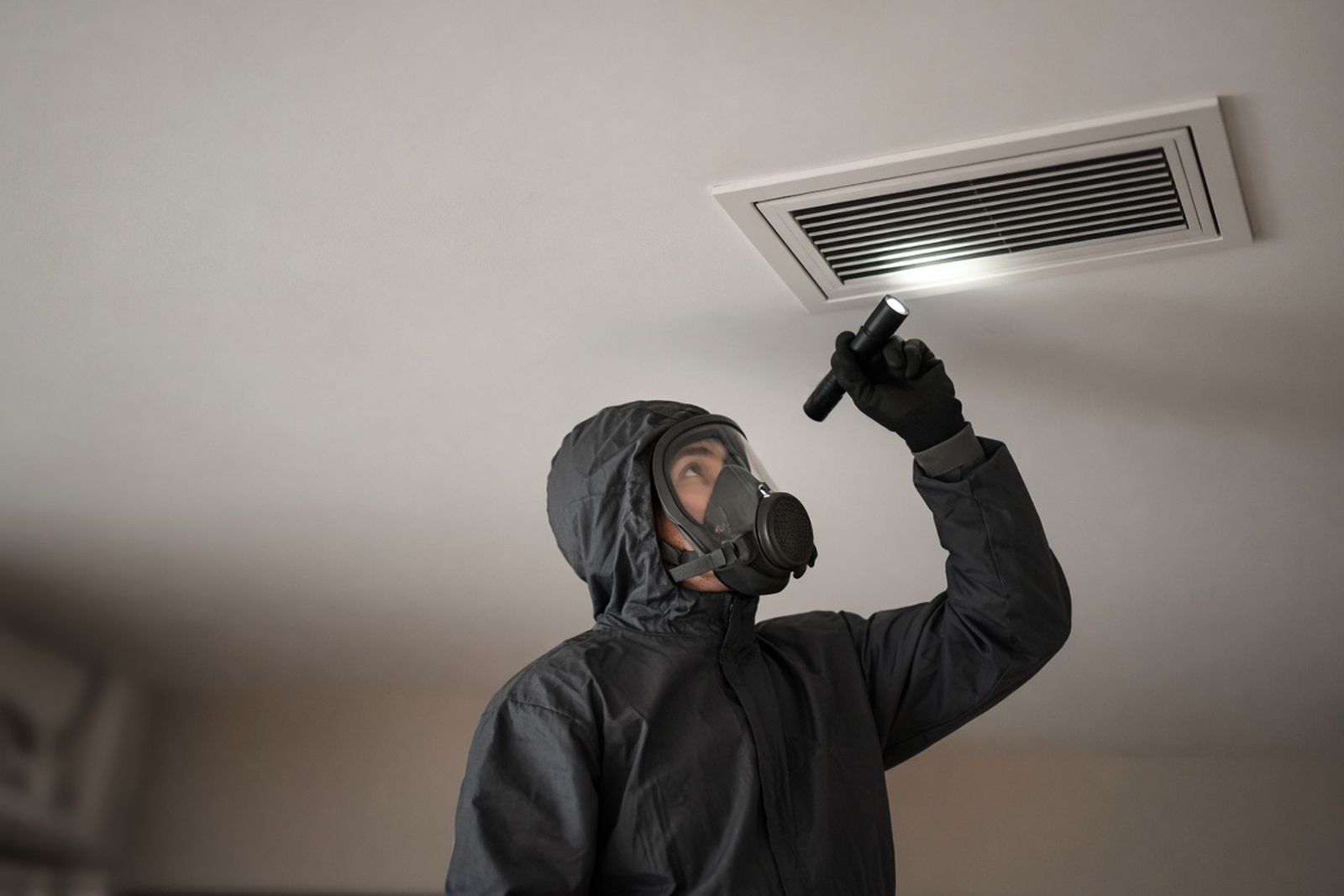
Detection tools are the least glamorous and often the most valuable. Moisture meters and thermal cameras reveal damp areas behind walls and under floors, which point to leaks, spills, and fluid migration. UV flashlights make many organic stains visible on carpet, walls, and furniture. Borescopes let technicians look inside wall cavities through a small hole.
Handheld gas meters matter when the odor could be dangerous, such as a sewer smell that might involve hydrogen sulfide or a combustion smell near appliances. They tell the technician whether the space is safe to work in and whether a utility or emergency call is needed first.
A provider who arrives with detection tools and uses them before recommending treatment is showing that they intend to find the cause. That habit matters more than which brand of air machine they own.
Removal and cleaning tools do the heavy lifting. Truck-mounted and portable extraction units flush and pull liquid from carpet and upholstery. Subsurface extraction tools reach pad and subfloor without always removing carpet. Injection tools deliver enzyme or oxidizing products deep into affected areas. Sanders and scrapers prepare framing and subfloor for sealing.
Soda and dry ice blasting can clean smoke residue from framing and masonry in heavy fire or smoke jobs, reaching crevices that hand cleaning cannot. Airless sprayers apply sealing primers evenly over large areas.
None of these tools is new or flashy, but they determine whether the source is actually dealt with. When comparing providers, ask what equipment they use for source work, not just for air treatment.
Drying equipment belongs here too. Low-grain refrigerant dehumidifiers and air movers dry treated subfloor, framing, and concrete before sealing. Sealing damp material traps moisture and can create a new musty odor, so a provider who measures and documents drying before priming is protecting the result.
- Moisture meters and thermal cameras: hidden liquid and damp materials
- UV lights: organic stains such as urine
- Borescopes: inside wall and ceiling cavities
- Gas meters: safety checks for sewer and combustion odors
Air filtration: particles vs gases
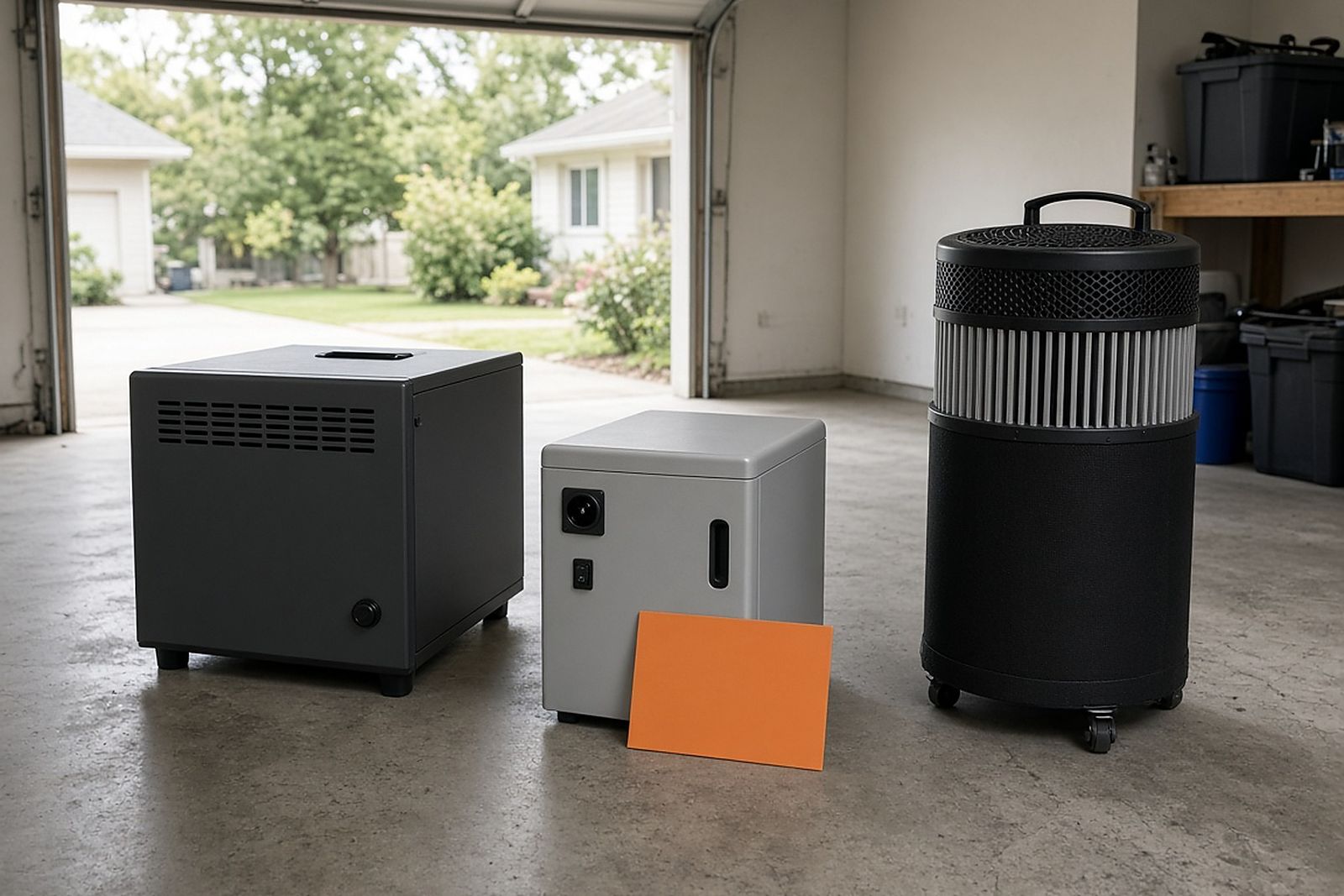
Air scrubbers and filtration units pull room air through filters. HEPA filters capture particles, which is valuable when soot, dust, or other particles carry odor.
Gases need a different filter. EPA says activated carbon filters can be effective at removing gases and odors provided a large amount of carbon is used. A small carbon pre-filter on a consumer unit holds little and saturates quickly. Professional units carry much more carbon and are sized for the space.
Filtration adds nothing to the air, which makes it safe to run while people are present in most cases. Its limit is that it only treats air that passes through it. It cannot reach residue in a wall or under a floor. Think of it as a companion to source work, not a replacement.
Ozone, hydroxyl, foggers, and other air treatments
Oxidizing machines produce reactive molecules that break down some odor compounds. Ozone generators are the best known. Hydroxyl generators and photocatalytic units produce other reactive species and are often marketed as safe for occupied spaces.
Ozone requires clear limits. The 2019 NIOSH Pocket Guide lists a ceiling exposure limit of 0.1 ppm for ozone and treats 5 ppm as immediately dangerous to life or health. At levels high enough to affect odor, ozone treatment must happen in an empty space with a controlled reentry plan. It can also degrade rubber, some plastics, and certain fabrics.
Hydroxyl and photocatalytic technologies are harder to evaluate because product designs vary widely and independent data for real-world odor jobs is limited. Some may create byproducts. Ask the provider what the device produces, what independent testing exists for it, and whether occupants need to leave during use.
In every case, oxidizing machines work best after the source is removed. Running them against an active source uses energy and time without ending the problem.
Foggers turn a liquid product into fine droplets that spread through a room and settle on surfaces. Thermal foggers use heat to create a dense fog that can follow the same paths smoke did, which makes them useful after fires. Ultra-low-volume foggers create cooler, larger droplets for deodorizers and disinfectants.
Fogging can reach places hand application misses, such as the tops of cabinets or the inside of wall voids through small openings. But it deposits product broadly, whether or not a surface needs it. If the product is mostly fragrance, fogging masks rather than removes.
Ask what product will be fogged, why fogging is needed instead of targeted application, and how long the space must stay empty. The answers should connect back to a source the provider has already addressed.
Can sensors and air quality monitors prove the odor is gone?
Consumer and professional air monitors can measure particles, total volatile organic compounds, carbon dioxide, humidity, and sometimes specific gases. They are useful for tracking trends, confirming that ventilation is working, and spotting humidity that could lead to musty smells.
They cannot measure odor directly. Many odor compounds are detectable by the human nose at concentrations far below what a typical VOC sensor can distinguish, and a total VOC reading lumps many unrelated chemicals together. A drop in the reading is encouraging but not proof.
The most reliable test remains a controlled smell check. Close the space, allow it to warm, run the HVAC, and have fresh noses walk through. Sensors can support that test, especially for humidity and particles, but they should not replace it.
Some providers now leave a small monitor in place for a week or two after a job, logging humidity and temperature. That record can be helpful if a smell returns, because it shows whether the building went through a humid stretch that might have reactivated a missed source.
How a careful provider evaluates a new tool
New devices tend to arrive with glowing reviews and little independent data. A plug-in unit that claims to eliminate pet odors in occupied homes without chemicals is typical of the pitch. A careful company does not take that claim on faith.
Instead, it tries the device only on jobs where the source has already been removed and sealed, running it in one room and a standard carbon scrubber in a similar room. Staff record humidity and particle readings, and people who were not involved in the work do blind smell checks in both rooms after a day.
It also asks the manufacturer what byproducts the device produces. If the device performs no better than the carbon unit, or the manufacturer cannot answer the byproduct question, the company has a clear reason not to adopt it and can explain that decision to its staff.
That process, small-scale trials, fair comparisons, and attention to what a device adds to the air, is what you want to see from any provider who talks about using the latest technology.
Questions to ask about any odor technology
Before agreeing to a treatment that relies on equipment, ask a few direct questions. The answers will tell you whether the tool fits your situation or is being sold as a cure-all.
Keep in mind that technology is only as good as the plan it serves. A provider with modest equipment and a careful inspection often outperforms one with the newest machines and a rushed diagnosis.
- What does this tool do to the source, if anything?
- What does it add to the air, and are there byproducts?
- Do people and pets need to leave, and for how long?
- What independent data supports it for this kind of odor?
- How will we check the result under realistic conditions?