Short answer
Evaluate odor removal equipment by asking what problem each machine solves and when it will be used. Detection tools such as UV lights and moisture meters find the source. Removal and cleaning tools eliminate it. Air treatment devices, including carbon filtration, HEPA units, hydroxyl generators, foggers, and ozone machines, only address what remains afterward. A proposal that leads with machines and skips source removal deserves a closer look.
What a provider's equipment list reveals
Equipment reveals how a provider thinks about your odor problem. A proposal built around detection tools, demolition supplies, and cleaning gear suggests the company plans to find and remove the source. A proposal built almost entirely around air machines suggests the plan is to treat the air and hope the smell stays gone.
Machines are not bad. Many odor jobs genuinely need air treatment at the end. The question is sequence and fit. A carbon scrubber running in a room with soaked carpet pad is working against a source that keeps producing new odor every hour.
When you read a quote, look for a short explanation next to each piece of equipment. What will it do, where will it run, how long will it stay, and what must happen before it is turned on? A provider who answers those questions easily is usually one who has matched the tools to the problem.
Detection tools that find the source
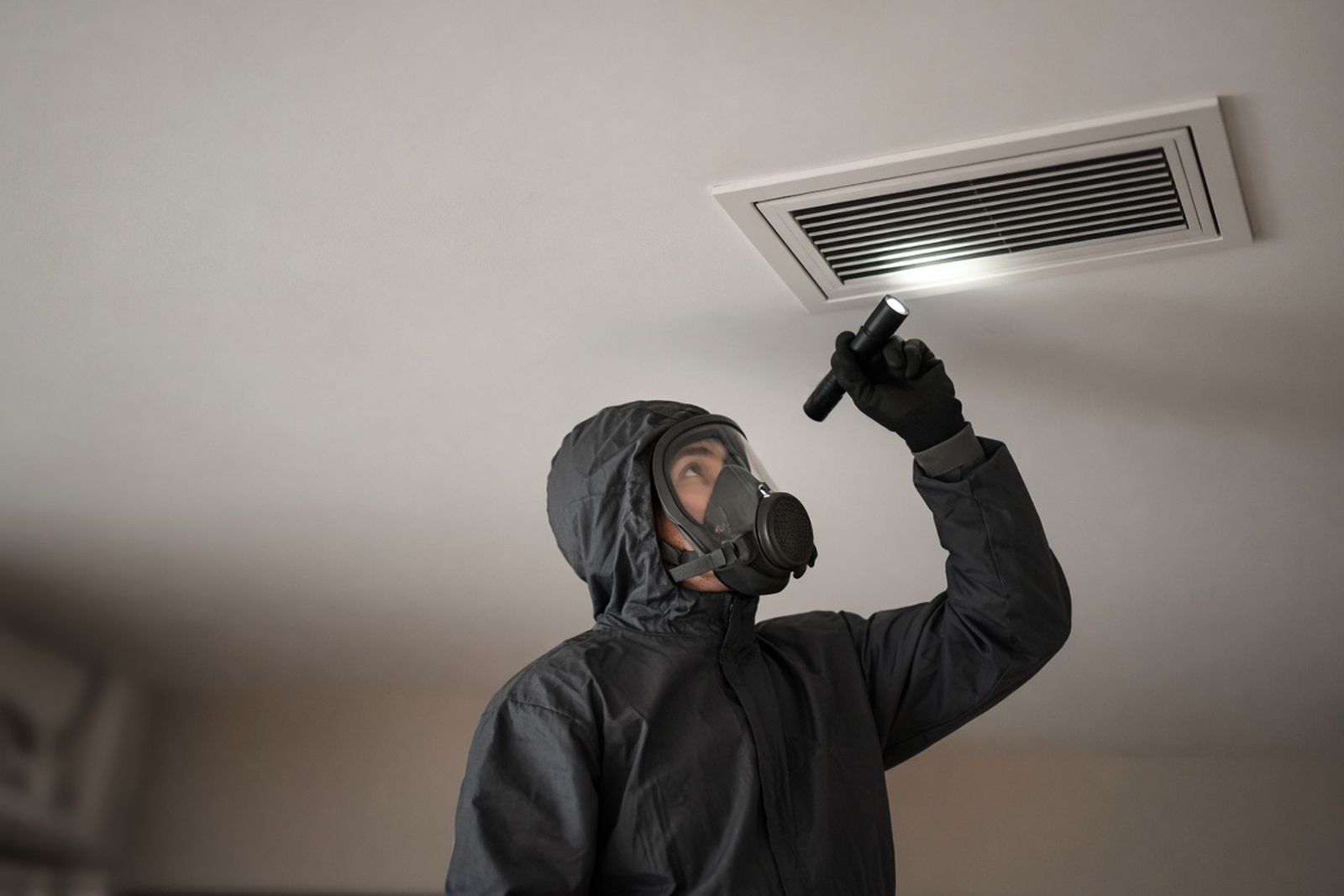
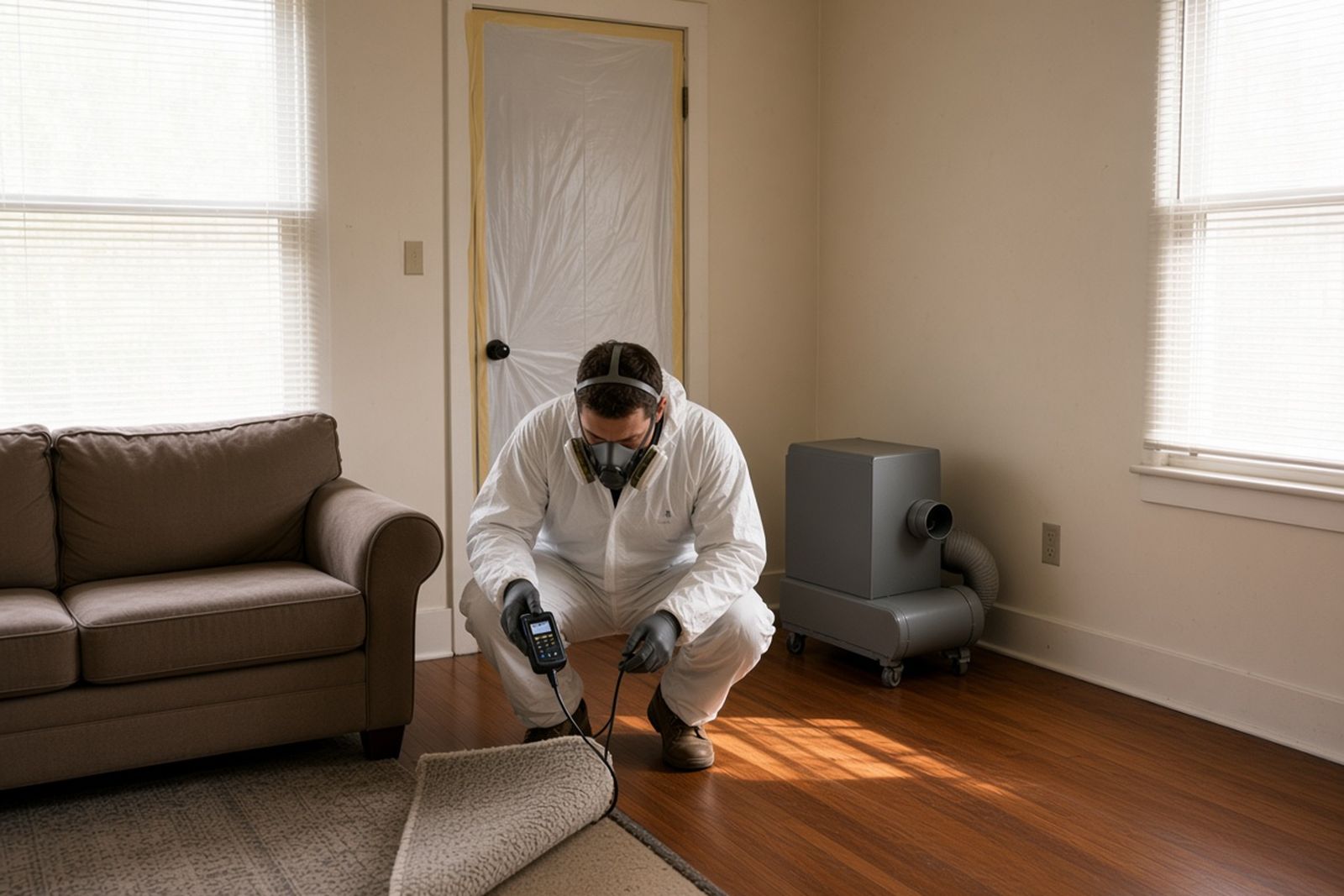
Detection comes first, and the tools are often modest. A UV flashlight makes old urine and some other organic stains glow on carpet, baseboards, and walls. A moisture meter finds damp drywall, subfloor, or framing where a spill or leak has soaked in. An infrared camera can show temperature differences that point to hidden moisture.
Borescopes, which are thin cameras on flexible cables, let a technician look inside wall cavities, ducts, and under cabinets through a small opening. They are especially helpful when the suspected source is a dead animal or a plumbing leak behind a finished wall.
For certain odors, gas detectors matter too. If sewer gas, propane, natural gas, or combustion byproducts could be involved, a technician should carry a meter or recommend that a utility or plumber check first. Some odors signal a safety problem, not just an unpleasant smell.
- UV flashlight for urine and organic stains
- Moisture meter and infrared camera for hidden dampness
- Borescope for wall cavities, ducts, and tight spaces
- Gas detector where sewer, fuel, or combustion gases are possible
Removal and cleaning equipment
Removal equipment is the least glamorous part of an odor job and often the most important. Expect utility knives, pry bars, carpet tools, drywall saws, heavy-duty bags, and, for biological sources, protective gear and packaging for regulated waste.
Cleaning equipment includes truck-mounted or portable extractors for carpet and upholstery, sprayers for applying enzyme or oxidizing products, and scrub brushes or floor machines for hard surfaces. For smoke jobs, dry-cleaning sponges and specialized wall-washing systems remove residue before any sealer goes on.
Drying equipment such as dehumidifiers and air movers follows cleaning. Materials must be dry before they are sealed or covered. Sprayers or rollers for odor-blocking primers finish the source work on cleaned framing, subfloor, or concrete.
If a proposal skips this category entirely, ask how the source will be handled. The answer should be specific to your home.
What do carbon and HEPA air scrubbers actually capture?
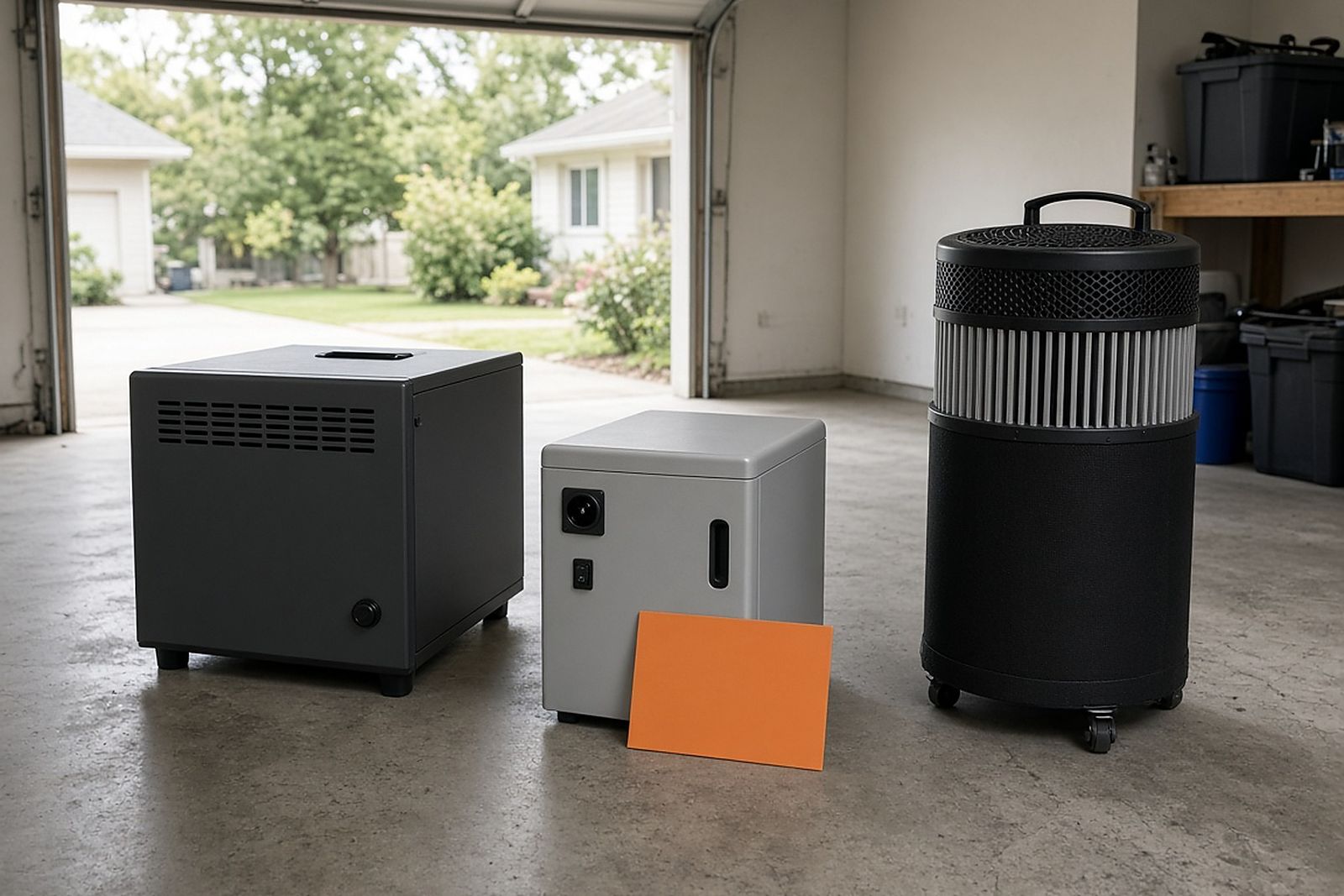
Air scrubbers pull room air through filters and push cleaner air back out. They help during and after source work by reducing odor molecules and particles in the air so conditions improve while the job continues.
Two filter types do different jobs. EPA defines a HEPA filter as one that removes at least 99.97% of airborne particles at 0.3 microns, the most penetrating particle size, according to its 2024 guidance. That makes HEPA useful for soot, dust, and debris that carry odor, but HEPA filters do not trap gases.
Activated carbon captures gases. EPA also says in its 2024 air cleaner guide that activated carbon filters can be effective at removing gases and odors provided a large amount of carbon is used. A thin carbon pre-filter on a small unit will saturate quickly, while a deep carbon bed lasts much longer.
Ask how much carbon a unit holds, how often the filters will be changed, and whether the filters will be replaced before the machine leaves your home. Saturated carbon can release captured odor back into the air.
Are ozone generators safe and appropriate?
Ozone machines appear in many odor proposals, and they require careful evaluation. Ozone is a reactive gas that can change some odor molecules, but it is also a lung irritant, and it can degrade rubber, some plastics, fabrics, and artwork with heavy or repeated exposure.
The regulatory picture is cautious. EPA states in the same 2024 guide that no federal agency has approved ozone-producing air cleaners for use in occupied spaces. FDA regulation 21 CFR 801.415 deems an ozone-generating device adulterated if it produces or accumulates ozone above 0.05 ppm in occupied enclosed spaces.
When professionals use ozone, the space must be empty of people, pets, and plants, the treatment must be timed, and the area must be ventilated before re-entry. Ask exactly how the provider will control access, how long the treatment will run, how they will confirm the space is safe to enter, and which of your belongings should be removed first.
If a provider suggests running ozone while you continue to live in the home, decline and ask for an alternative.
Hydroxyl units, foggers, UV devices, and the HVAC system
Hydroxyl generators use ultraviolet light to create short-lived reactive molecules from moisture in the air. Providers often choose them for spaces where people or pets may remain, though you should still ask the manufacturer's guidance for occupied use and how long the unit will run.
Thermal foggers heat a deodorizing solution into a fine vapor that penetrates the same small spaces smoke reached. Cold or ULV foggers produce slightly larger droplets for surface treatment. Foggers are commonly used in fire and smoke jobs after cleaning, and the space must usually be vacated during treatment.
UV lamps and other devices sometimes appear in HVAC systems to reduce microbial growth on coils. They can help with musty odors tied to that growth but do not address a source elsewhere in the home.
For any of these, ask what the device does chemically, what the label or manufacturer says about occupancy, and what surfaces or belongings should be protected.
Your heating and cooling system can spread odor from one room to the whole house, so some proposals include duct cleaning equipment. That usually means a powerful negative-air machine connected to the ductwork, along with rotating brushes or air whips that loosen residue from inside the ducts.
Duct work makes the most sense when smoke, soot, or airborne residue clearly reached the system, or when return vents sat near the source. It makes less sense as a routine add-on for a localized pet stain in a room far from any return.
Ask whether the provider will also replace the furnace filter, clean the blower compartment, and check the coil. A clean duct run connected to a dirty air handler will still push odor into the rooms.
Two equipment lists compared (illustrative)
The two proposals below are an invented comparison, not a real job. A couple finds a persistent musty, sour smell in a finished basement after a slow leak from a water heater. They receive two proposals.
The first proposal lists two ozone generators and a thermal fogger, with a promise to have the smell gone in one visit. It does not mention moisture testing or any removal work.
The second proposal starts with moisture mapping and an infrared scan of the walls and carpet. It lists removal of wet carpet pad and the bottom section of affected drywall, a dehumidifier and air movers for drying, an antimicrobial cleaning of the exposed framing, an odor-blocking primer, and a carbon scrubber during and after the work. It notes that ozone would be considered only if odor remained after drying and sealing, and only with the basement empty.
The second list costs more up front, but it explains why each tool is there. The couple chooses it, and they ask the provider to keep the moisture readings on file so they can show a future buyer that the leak was dried and repaired.
Questions for any machine in the proposal
Use the same set of questions for every device, whether it is a simple fan or an advanced air treatment unit. The answers will quickly show whether the tool is matched to your situation.
Ask whether the provider owns and maintains the equipment, how filters or consumables are handled between jobs, and whether the machines have been cleaned since their last use. Equipment that moves from job to job can carry odor with it if it is not maintained.
- What problem does this machine solve in my home?
- When in the job will it run, and for how long?
- Can people and pets stay in the space while it runs?
- Which materials or belongings could it affect?
- How will you confirm it worked, and what happens if it did not?