Odor Removal: Education
Science and technology used in some odor removal scopes, with explicit limits for ATP, disinfectants, enzymes, fogging, air equipment, and moisture tools.
Education posts explain how odors form, travel, and cling to the materials in your home. Articles cover the chemistry of odor chemicals given off by decay, urine, smoke, and mildew. They explain why soft materials trap them and how humidity and heat bring them back. You will also read about how hydroxyl machines, ozone, thermal fogging, and enzyme cleaners work, and where each falls short. You will learn how to judge machines or methods a provider suggests. Other posts look at the difference between cleaning, disinfecting, and deodorizing. They also explain what a quick swab test that shows leftover organic residue can and cannot tell you about odor work. That test does not detect germs.
Get an email reply about odor removal
Send a short message to the follow-up inbox. A coordinator can reply by email. This form does not send emergency help; call 911 first if anyone is in danger.
This background helps you ask sharper questions when a quote lists machines or products you do not know. Say you know why an enzyme cleaner suits urine but not smoke, or why ozone cannot reach a source under vinyl flooring. Then you can judge whether a plan fits your case. It also makes it easier to spot offers that sell a quick fix without dealing with the materials that hold the smell. Knowing how odor behaves also explains why a smell can seem stronger in one season than another. That keeps you from thinking a job failed when the weather just changed. It makes follow-up talks with a provider more useful and far less frustrating.
The Science Behind Odor Removal
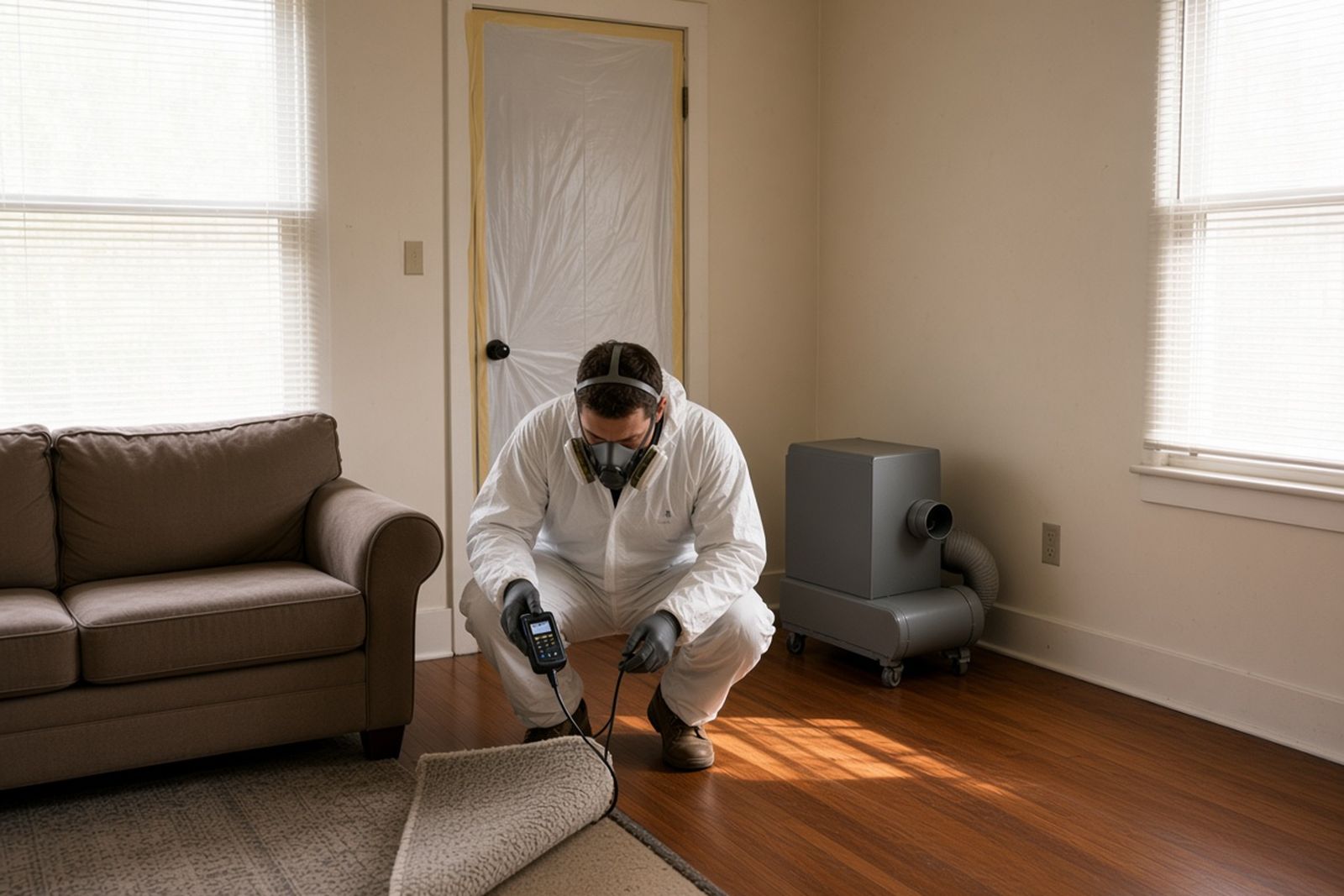
Odors are molecules released from a physical source. Learn how volatility, porous materials, and chemistry explain why source removal beats masking a smell.
Odor removal works because every smell is made of airborne molecules released by a physical source. Professionals find that source, remove or clean it, break down or seal remaining residue, and capture what is left in the air. Masking products only add competing molecules. Lasting results come from stopping the release of odor molecules, not from covering them up.
How to Evaluate Equipment Proposed for Odor Removal
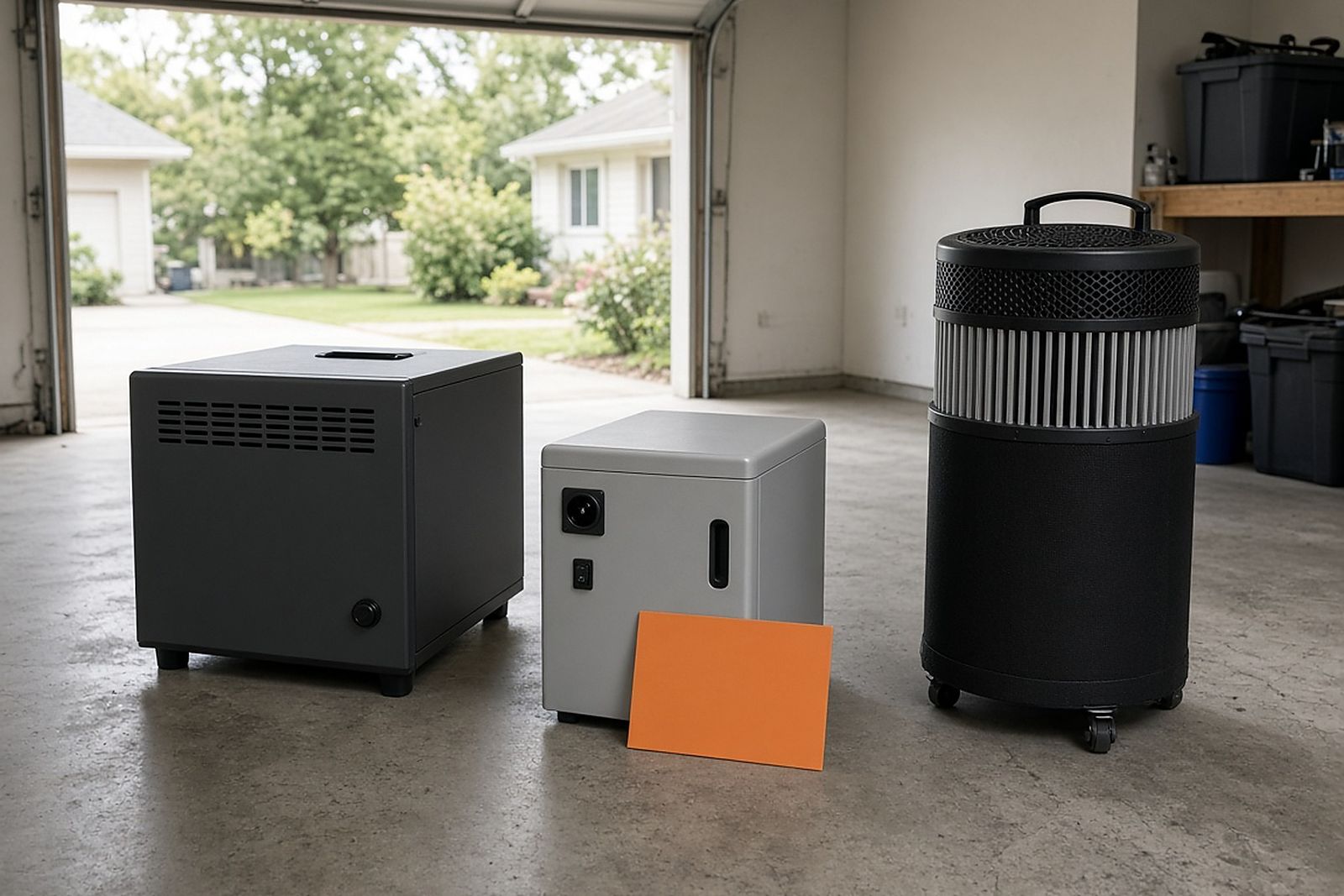
Ozone machines, foggers, hydroxyl units, carbon scrubbers, and UV lights all show up in odor quotes. Learn what each one does and when it truly fits your home.
Evaluate odor removal equipment by asking what problem each machine solves and when it will be used. Detection tools such as UV lights and moisture meters find the source. Removal and cleaning tools eliminate it. Air treatment devices, including carbon filtration, HEPA units, hydroxyl generators, foggers, and ozone machines, only address what remains afterward. A proposal that leads with machines and skips source removal deserves a closer look.
The Difference Between Cleaning and Disinfection in Odor Removal
Cleaning removes the residue that smells, disinfection kills microbes that make more of it, and deodorizing handles what lingers. Here is how the steps fit.
In odor removal, cleaning physically removes the residue that produces the smell, such as urine salts, smoke film, or organic soil. Disinfection uses a registered product to kill microorganisms on a surface, which matters when bacteria or mold are feeding the odor. Neither step alone removes smells trapped in air or porous materials, so professionals usually clean first, disinfect where needed, then deodorize and verify.
When ATP Testing Helps—and When It Does Not—in Odor Removal
ATP swabs measure organic residue on surfaces, not smell in the air. Learn where ATP readings help an odor job, where they mislead, and what to ask instead.
ATP testing measures biological residue on a swabbed surface, so it can help an odor job by showing whether organic sources such as urine, food, or bodily fluids were cleaned from hard surfaces. It cannot measure odor in the air, detect smoke film or chemical smells, or reach inside porous materials. Treat it as one verification tool alongside inspection and a controlled smell test.
How to Evaluate Technology Used in Odor Removal
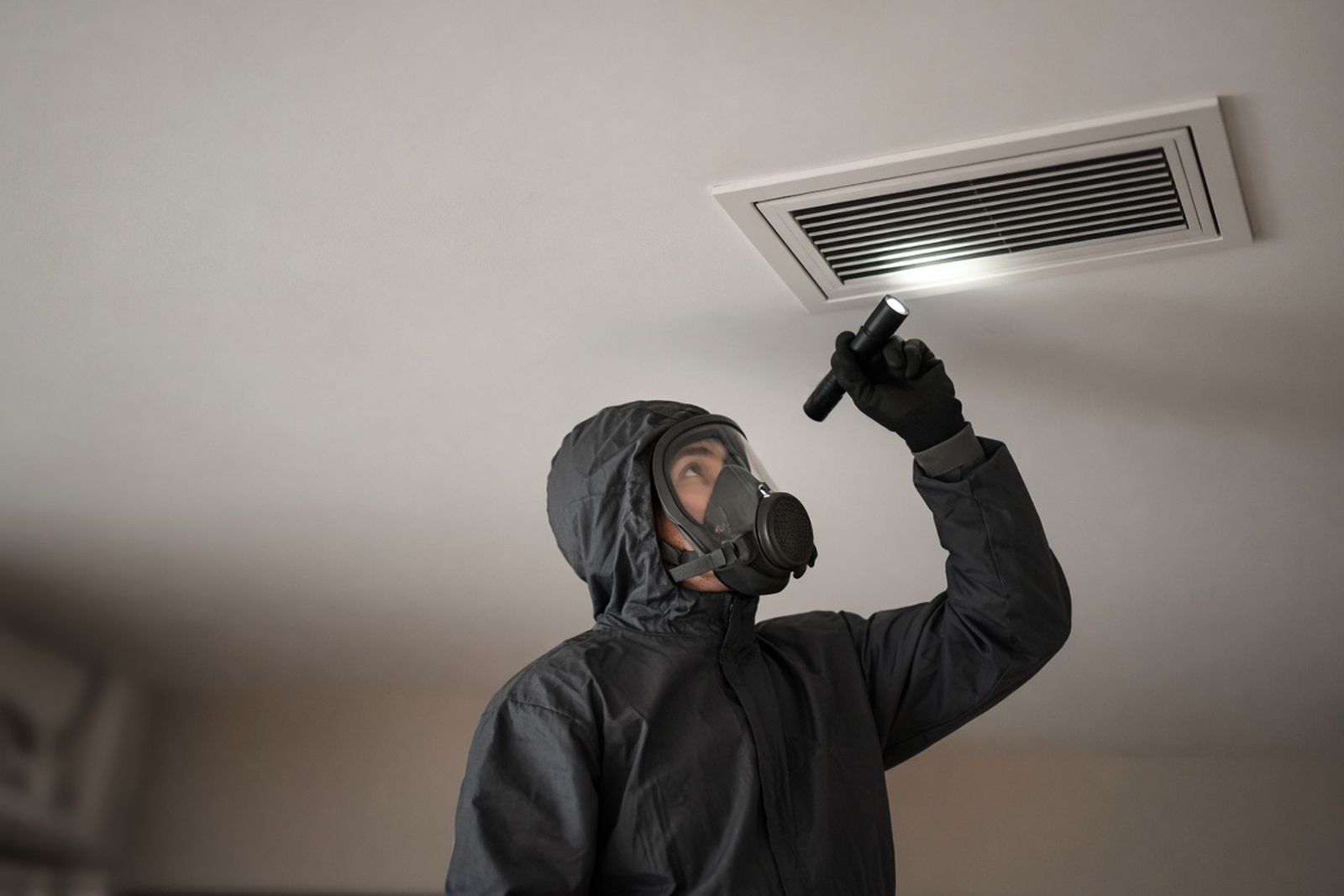
Hydroxyl units, ozone, thermal fogging, and smart sensors all promise results. Learn to judge odor removal technology by what it does to the source.
Evaluate odor removal technology by asking what it does to the source, what it adds to the air, who must leave during use, and how results will be checked. Tools that find and remove sources, such as moisture meters, UV lights, and extraction equipment, usually matter more than air treatment machines. Filtration, oxidizers, and foggers are finishing tools, and each has limits providers should explain plainly.
When Enzymes or Microbial Products Fit Odor Removal
Enzyme and bacterial cleaners can digest urine, vomit, and food residue, but not smoke or chemical odors. Learn when bio-based products fit an odor job.
Enzyme and microbial products work on organic odor sources such as urine, feces, vomit, food spills, and some decomposition residue by breaking them down into simpler, less odorous compounds. They need direct contact, moisture, and time. They do not work well on smoke, fuel, solvents, or mineral deposits, and they are not disinfectants. Use them as part of a source-removal plan, not as a spray-and-go fix.
Sourced figures on education
- 0.1 ppm
OSHA's permissible exposure limit for ozone is 0.1 ppm (0.2 mg/m3) as an 8-hour time-weighted average for workers.
Read with care: An occupational limit for healthy adult workers, not a residential or vulnerable-population safety threshold.
Source: OSHA (2024)US workplaces; occupational 8-hour exposure
- 0.05 ppm
FDA regulation 21 CFR 801.415 deems an ozone-generating device adulterated if it produces or accumulates ozone above 0.05 ppm in occupied enclosed spaces.
Read with care: The rule applies to devices marketed as medical devices; consumer ozone generators may fall outside its enforcement scope.
Source: FDA (2024)US federal regulation for medical devices in occupied enclosed spaces
- 5 ppm IDLH
NIOSH sets a ceiling exposure limit of 0.1 ppm for ozone and classifies 5 ppm as immediately dangerous to life or health (IDLH).
Read with care: IDLH is a worker escape threshold and does not describe long-term residential exposure risk.
Source: NIOSH (2019)US occupational guidance; ceiling not to be exceeded at any time
These figures are public research and agency data, not this network's own job records. Keep each number with its population, year and limits; none of them predicts cost, timing or outcome at a specific property.
What research has found
Findings from published studies of people and properties in situations like this one. They describe what researchers observed in a specific group; they are not predictions for your case.
Air quality improved immediately after the smoking ban.
Surface reductions remained evident three months later.
Education: common questions
How is a hydroxyl generator different from an ozone machine?
Both make reactive molecules that break down odor chemicals. Ozone machines make high levels of ozone. The space must be empty because ozone irritates lungs. Hydroxyl machines work more slowly. They are often described as safe to use with people inside, depending on the maker's guidance. Neither one removes a source that has soaked into materials.
When do enzymatic cleaners help with odor?
Enzyme cleaners break down organic matter like urine, vomit, and some food residue. That can shrink the source of those smells when the product really reaches the mess. They do little for smoke residue or chemical odors. And they cannot save pad or subfloor that is badly soaked. Follow the label on how long the product must stay wet to work.
Does disinfecting a surface remove its odor?
Not always. Disinfectants target germs, while odor comes from chemicals that may stay after the germs are killed. A disinfected surface can still smell if residue stays behind or if the source is below the surface. Good odor work combines cleaning, removing the source, and, when needed, air treatment.
Why do some materials hold odor more than others?
Soft, absorbent materials have many tiny spaces where liquids and odor chemicals settle. Examples are carpet pad, drywall paper, raw wood, furniture foam, and insulation. Hard, sealed surfaces like glazed tile, glass, and finished countertops keep residue on top, where cleaning can reach it. That is why the same spill may wipe off tile but need removal or sealing when it reaches pad or subfloor.
What is thirdhand smoke, and why does it matter for odor?
Thirdhand smoke is the residue left on surfaces, dust, and fabrics after tobacco smoke clears from the air. It clings to walls, ceilings, carpets, and ducts. It can keep giving off odor long after smoking stops. That is why painting over smoke rarely works. Careful smoke jobs combine washing, replacing soft materials, cleaning ducts, and sealing before any air treatment.
What is the difference between masking and neutralizing an odor?
Masking adds fragrance that competes with the smell without changing it. So the first odor comes back when the fragrance fades. Neutralizing products react with or bind certain odor chemicals so they smell less. Neither removes a source that keeps making odor. Use neutralizers as a last step after the source has been removed or cleaned, not as the main treatment.
How can I learn to describe a smell so a provider understands it?
Compare it to smells people know, like ammonia, rotten eggs, wet cardboard, stale cigarettes, sour milk, or burnt plastic. Note where it is strongest, when it shows up, and what makes it worse. That could be heat, humidity, rain, or running the heating or cooling. Mention whether it is there all the time or comes and goes. That description often points to a likely source before anyone arrives.
Related community polls
Every count is a real visitor vote; nothing is seeded or padded. One vote per poll per device, and you can change your answer.
When a persistent smell first appeared in your home, what did you try first?
How long did you live with a recurring odor before seeking outside help?
More on odor removal
Odor Removal services
See how professionals trace death, pet, smoke, sewage, and musty odors to their source and remove it before any air treatment begins.
Costs explained
What drives the price, published cost ranges, and how to read a written quote line by line.
Insurance and payment
Which policies may respond, how to document a claim, and what to do if coverage is denied.
Planning tools
Estimate the job, check a provider, organize a claim, plan your first day, sort removed material, and decide if this odor job is safe to do yourself.
Community polls
See how other homeowners, renters, and landlords handled stubborn smells, what they tried first, and how they knew when an odor was really gone.
Knowledge quiz
Test what you know about where odors hide, safe use of air machines, how ducts spread smells, and why covering a smell is not the same as removing it.