Short answer
Enzyme and microbial products work on organic odor sources such as urine, feces, vomit, food spills, and some decomposition residue by breaking them down into simpler, less odorous compounds. They need direct contact, moisture, and time. They do not work well on smoke, fuel, solvents, or mineral deposits, and they are not disinfectants. Use them as part of a source-removal plan, not as a spray-and-go fix.
Enzyme and microbial products, defined
Enzyme products contain proteins that speed up specific chemical reactions. Different enzymes target different materials: proteases break down proteins, amylases work on starches, lipases handle fats and oils, and ureases act on urea. A good product blends several so it can handle mixed residues.
Microbial products, often called bio-enzymatic or bacterial cleaners, contain live, beneficial bacteria, usually in spore form. Once they land on organic residue with enough moisture, the bacteria wake up, produce their own enzymes, and consume the residue as food. They keep working as long as there is something to digest and conditions stay favorable.
Both approaches are sometimes called bioremediation because they use biological processes to break down the source of a smell. In odor work, that term simply means digesting the residue rather than masking it or removing the whole material.
Product quality varies widely. Some consumer sprays contain only small amounts of active enzyme and a lot of fragrance, which can make a spot smell better for a day without breaking down much residue. Professional concentrates are usually diluted on site and applied in larger volumes. Reading the label for the types of enzymes or bacterial strains, storage directions, and dwell time tells you more than the marketing on the front.
Which odors they work on, and which they don't
Bio-based products are built for organic sources. Pet urine and feces, human incontinence, vomit, spoiled food, milk spills, grease in drains, and some residues left after biohazard cleanup all fall into this group.
Urine is the classic case. Fresh urine is mostly water and urea, but as it breaks down it forms ammonia and uric acid salts. Those salts cling to fibers and wood, and they release odor again whenever humidity rises. Enzymes and bacteria can digest much of that residue if they reach it.
Organic residue in drains and grease traps also responds well. Many commercial kitchens use microbial products on a schedule to keep drains from building up odor-producing sludge.
After a death or other biohazard event, bio-based products sometimes play a supporting role. Once qualified technicians have removed contaminated materials and cleaned and disinfected the area, an enzyme treatment on concrete, framing, or subfloor can help break down traces of organic residue that remain in the pores before sealing. It is a finishing step, never the main cleanup.
Enzymes and bacteria need something they can break down or eat. Tobacco tar, fire soot, petroleum products, and many industrial chemicals are not food for the organisms in these products, and the enzymes in most blends are not designed to act on them.
Smoke odor calls for cleaning with degreasers and detergents to lift the residue, followed by sealing and filtration. Fuel and solvent odors call for removing the affected material and ventilating, sometimes with specialized absorbents.
Using an enzyme product on the wrong source wastes money and time. It can also leave behind added moisture and organic material that feeds a new musty odor. A provider should identify the source before choosing any chemistry.
- Good fit: pet urine, feces, vomit, food and milk spills, drain buildup
- Possible fit after cleanup: residue from bodily fluids on porous surfaces
- Poor fit: tobacco smoke, fire smoke, fuel, solvents, paint, mineral scale
Contact, moisture, and time
Contact is the first requirement. The product has to reach the residue. For urine in carpet, that usually means soaking through the fibers, backing, and pad to the depth the urine traveled, which often takes far more product than a surface spray.
Moisture is the second. Enzymes and bacteria work in water. If the treated area dries out too quickly, the process stops. Technicians often cover treated areas with plastic for a period to slow drying.
Time is the third. Unlike an oxidizer that reacts within minutes, bio-based products may need hours to a day or more. Rushing that step leaves residue behind.
Temperature and other chemicals matter too. Very cold conditions slow the process. Residue from bleach, strong disinfectants, or some cleaners can kill beneficial bacteria or deactivate enzymes, so the order of products needs planning.
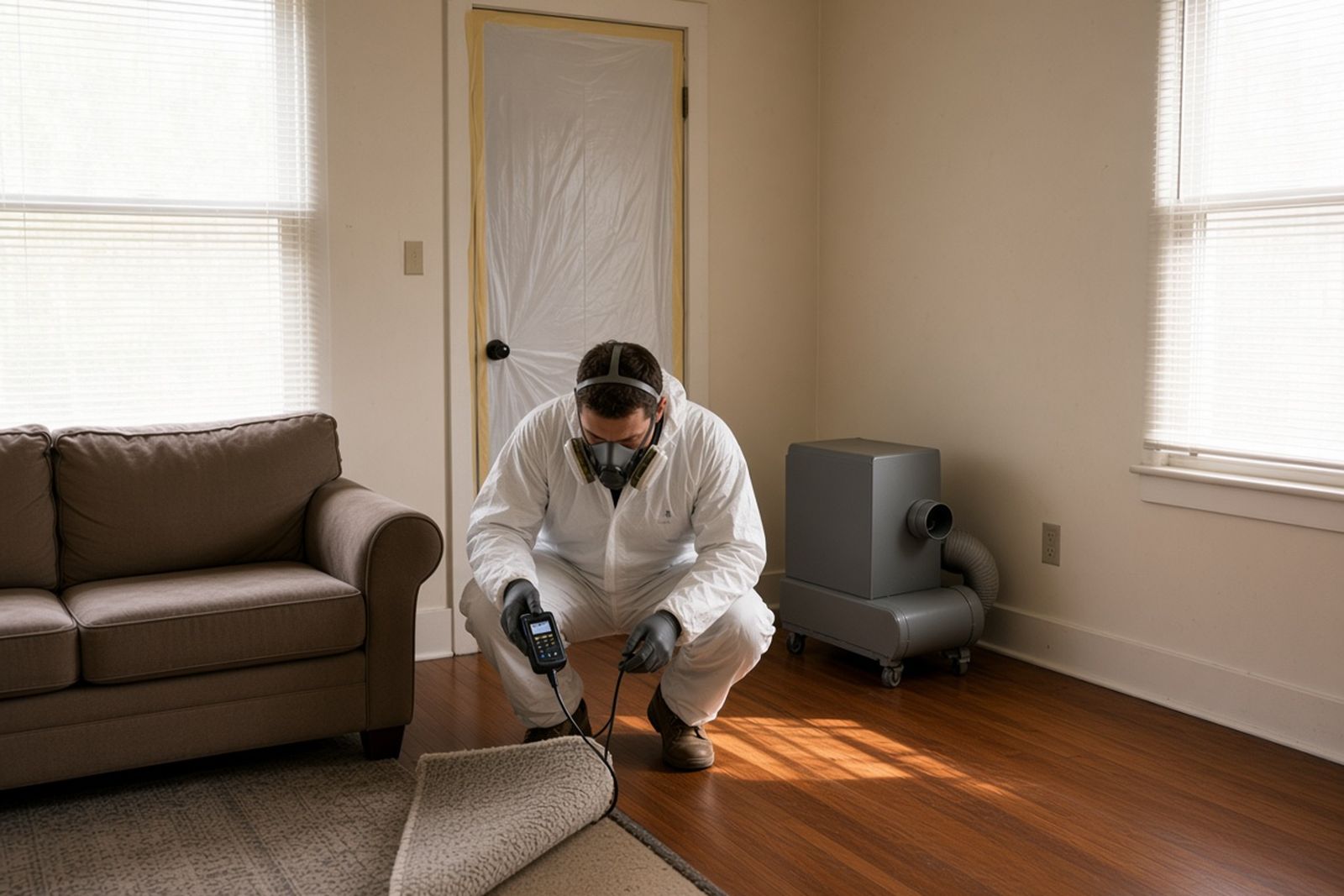
Checking progress is part of the process. Technicians often use a UV light and a moisture meter to see whether stains are fading and whether the area has dried as expected. A spot that still shows strong fluorescence or smells sharp once dry usually needs another application, extraction, or removal of the material.
Are enzyme products disinfectants?
No. Enzymes and beneficial bacteria break down organic material, but they are not registered to kill pathogens on surfaces. In situations involving blood, feces, or other potentially infectious materials, disinfection with an EPA-registered product is a separate step.
That creates a sequencing question. Disinfectants can kill the bacteria in microbial products, and some can deactivate enzymes. Professionals often clean and disinfect first where required, allow the disinfectant to finish its work and be rinsed as the label directs, and then apply enzyme products for residual odor. The exact order depends on the situation and the products chosen.
If a provider suggests that an enzyme treatment alone is enough after a biohazard event, ask how they are addressing disinfection.
When removal beats enzymes
Bio-based products work best when residue is limited enough to reach and digest. When a material is heavily saturated, removal is often faster, cheaper, and more reliable.
Carpet pad is the common example. Pad acts like a sponge, and heavy urine contamination in pad rarely treats well. Replacing the pad while treating the subfloor and possibly the carpet back is often the better plan. The same logic applies to upholstered furniture foam, mattresses, and drywall that absorbed liquid.
Cost comparisons can help frame the decision. In its 2025 cost guide, Fixr lists a national average pet odor removal cost of $650, with most homeowners paying $500 to $800 and enzyme cleaning running $30 to $40 per room. Enzyme treatment is inexpensive per room, but repeated treatments of a saturated area can add up and still fall short. Your own costs will depend on the scope and your location.
Combining removal and enzymes on one floor
Old dog urine in a rental living room is a typical case for a combined plan. A UV light often finds several spots, and lifting the carpet at a corner shows which ones soaked into the pad and stained the subfloor and which stayed mostly in the carpet fibers and backing.
The heavy spots get removal. The pad under them is replaced, and the subfloor is saturated with an enzyme product, covered, allowed to work overnight, dried, and sealed. The lighter spots are flooded with enzyme product through the carpet, covered with plastic to slow drying, and extracted the next day.
A moisture meter confirms everything is dry before the carpet is re-stretched. The real test is the next warm afternoon, when an untreated spot would announce itself. Removal where residue is heavy and targeted enzyme treatment where it is light often solves what surface sprays could not.
Can I use enzyme products myself?
For small, fresh accidents on washable surfaces or carpet, consumer enzyme products can work well. Blot up as much liquid as possible, apply enough product to reach as deep as the spill did, keep it damp for the time the label suggests, and let it dry naturally.
Avoid mixing enzyme products with bleach, ammonia-based cleaners, or strong disinfectants, which can reduce their effectiveness or create harmful fumes. Do not use steam or very hot water first on urine, since heat can set proteins and make the stain harder to remove.
If a spot keeps coming back, or you find multiple old stains, the problem likely extends into pad or subfloor. That is when a professional assessment is worth the cost.
Store products as the label directs. Enzymes can lose strength with heat, freezing, or long storage, and microbial products have a limited shelf life. An old bottle that has been sitting in a hot garage may do little, which leads many people to conclude that enzymes do not work when the product itself was the problem.
Questions for a provider about bio-based treatments
Ask whether the source is organic and suitable for enzyme or microbial treatment. Ask how they will make sure the product reaches the full depth of the contamination and how long it will stay in place. Ask how they will handle disinfection if the source involved bodily fluids.
Ask what they will remove instead of treating, and why. A thoughtful provider will explain where bio-based products fit and where they do not. Disposal of materials contaminated with bodily fluids may be regulated, so ask how the provider will package and dispose of them.