Short answer
In odor removal, cleaning physically removes the residue that produces the smell, such as urine salts, smoke film, or organic soil. Disinfection uses a registered product to kill microorganisms on a surface, which matters when bacteria or mold are feeding the odor. Neither step alone removes smells trapped in air or porous materials, so professionals usually clean first, disinfect where needed, then deodorize and verify.
Three parts of an odor, three different steps
Many people use cleaning, disinfecting, and deodorizing as if they meant the same thing. In odor work, they are separate steps with separate jobs, and mixing them up is one of the most common reasons a smell comes back.
Think of an odor as having three possible parts. There is the residue, the physical material that gives off the smell. There may be living microorganisms, such as bacteria or mold, that keep producing odor as they grow. And there are odor molecules already in the air or absorbed into porous materials.
Cleaning addresses the residue. Disinfection addresses the microorganisms. Deodorizing addresses the molecules that remain. A job that skips the step matching the real cause will leave part of the problem in place, no matter how thorough the other steps are.
Sanitizing is a fourth word you may hear. It generally means reducing microorganisms to a lower level rather than killing the specific organisms named on a disinfectant label. Sanitizers are common on food-contact surfaces, but they are not a substitute for disinfection when a label-listed kill claim is needed.
What cleaning actually does
Cleaning physically removes soil, residue, and contamination from a surface. That usually means some combination of detergents, enzymes, solvents, agitation, extraction, and rinsing, chosen to match what is being removed.
In odor work, cleaning is usually the most important single step, because the residue is usually the source. Dried pet urine leaves salts and organic compounds that release smell whenever humidity rises. Smoke leaves a sticky film on walls and ceilings. Spilled food and body fluids leave proteins and fats that break down over time.
Research on tobacco residue shows how much cleaning alone can accomplish. In a 2021 study of multiunit housing by Matt and colleagues, dust nicotine loading fell about 60% immediately after cleaning. That is a meaningful reduction, and it also shows the limit: some residue remained, which is why smoke jobs often add sealing and repeat cleaning.
Cleaning does not necessarily kill microorganisms. It removes many of them along with the soil, but it is not designed to inactivate what remains.
The cleaning method matters as much as the effort. Water-based cleaners work well on many organic residues, while smoke film often needs specialized degreasers or dry cleaning sponges before any wet cleaning. Using the wrong method can smear residue deeper into a surface or set a stain permanently, which is one reason providers test a small area first.
What disinfection adds, and when it is needed
Disinfection uses a chemical product registered for that purpose to kill or inactivate microorganisms on a hard surface. Each product has label directions that specify which organisms it works against, how much to use, and how long the surface must stay wet, known as contact or dwell time.
Disinfection matters in odor work when living organisms are part of the problem. Bacteria growing in organic residue, such as in a sewage backup or after a decomposition event, can keep producing smelly compounds. Mold growing on damp materials produces the musty odor many people recognize.
Disinfection does little for odors that come from nonliving sources. A disinfectant will not remove smoke film, will not break down dried urine salts on its own, and will not pull odor molecules out of drywall. It is a targeted tool, not a general cure.
Disinfection also works best on surfaces that have already been cleaned. Soil and residue can shield microorganisms and use up the active ingredient, so the right order is clean first, then disinfect.
- Sewage backups and overflows
- Decomposition and unattended death odors
- Heavy animal waste in hoarded or neglected homes
- Surfaces with visible mold after the moisture source is fixed
- Areas where people may have contact with body fluids
Where deodorizing fits
Deodorizing deals with the odor molecules that remain after cleaning and any needed disinfection. Some of those molecules are floating in the air. Others have absorbed into porous materials such as drywall, wood, fabric, and insulation.
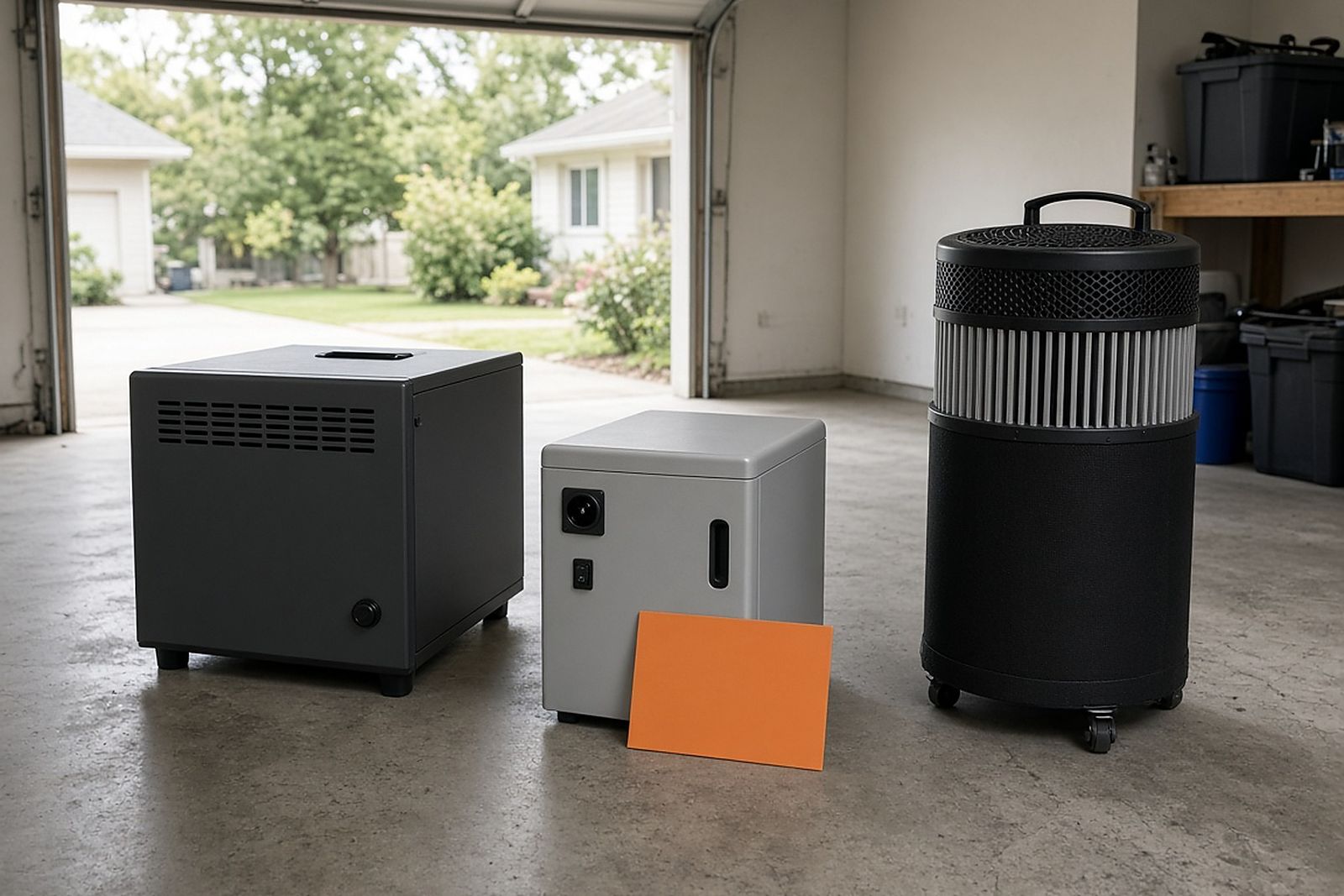
Deodorizing methods include activated carbon filtration, hydroxyl generators, thermal fogging, and, in vacant and controlled conditions, ozone. Some products chemically neutralize specific odor compounds. Sealing is often considered part of this stage too, because a specialty primer can lock residual odor inside a surface that cannot be removed.
What deodorizing cannot do is replace cleaning. If the source remains, the smell will return once treatment ends. That is why a good provider treats the air last, after source work is complete.
Verification belongs at the end of this stage. A closed-room check after the space has sat for a day, or a return visit when the weather turns warm and humid, shows whether cleaning, disinfection, and deodorizing together actually solved the problem. Without that check, it is hard to know whether a quiet week means success or just a cool spell.
Matching the steps to common odor problems
Each type of odor calls for a different mix of steps. A provider should explain which steps apply to your situation and why.
For pet urine, cleaning with enzyme products and extraction is central, and saturated pad or subfloor may need removal and sealing. Disinfection plays a smaller role unless there is heavy contamination. For smoke odor, cleaning soot and residue from every surface is the core, followed by sealing and air treatment. Disinfection usually is not the main concern.
For musty odors, fixing the moisture source comes first. EPA advises that mold patches under about 10 square feet can usually be cleaned by the occupant, and that indoor humidity should stay below 60 percent, ideally 30 to 50 percent, according to its 2024 mold guide. Larger or recurring mold problems usually call for a professional. For decomposition or sewage odors, all three steps are needed, along with removal of affected materials and regulated waste handling.
The most common mismatch is a disinfectant sold as an odor fix. A company promises to disinfect a unit that smells strongly of cat urine, sprays the carpet and hard floors, lets the product sit, and leaves.
The unit smells like the product for a day. Then the urine smell returns, because the disinfectant did nothing to remove the urine salts soaked into the pad and subfloor.
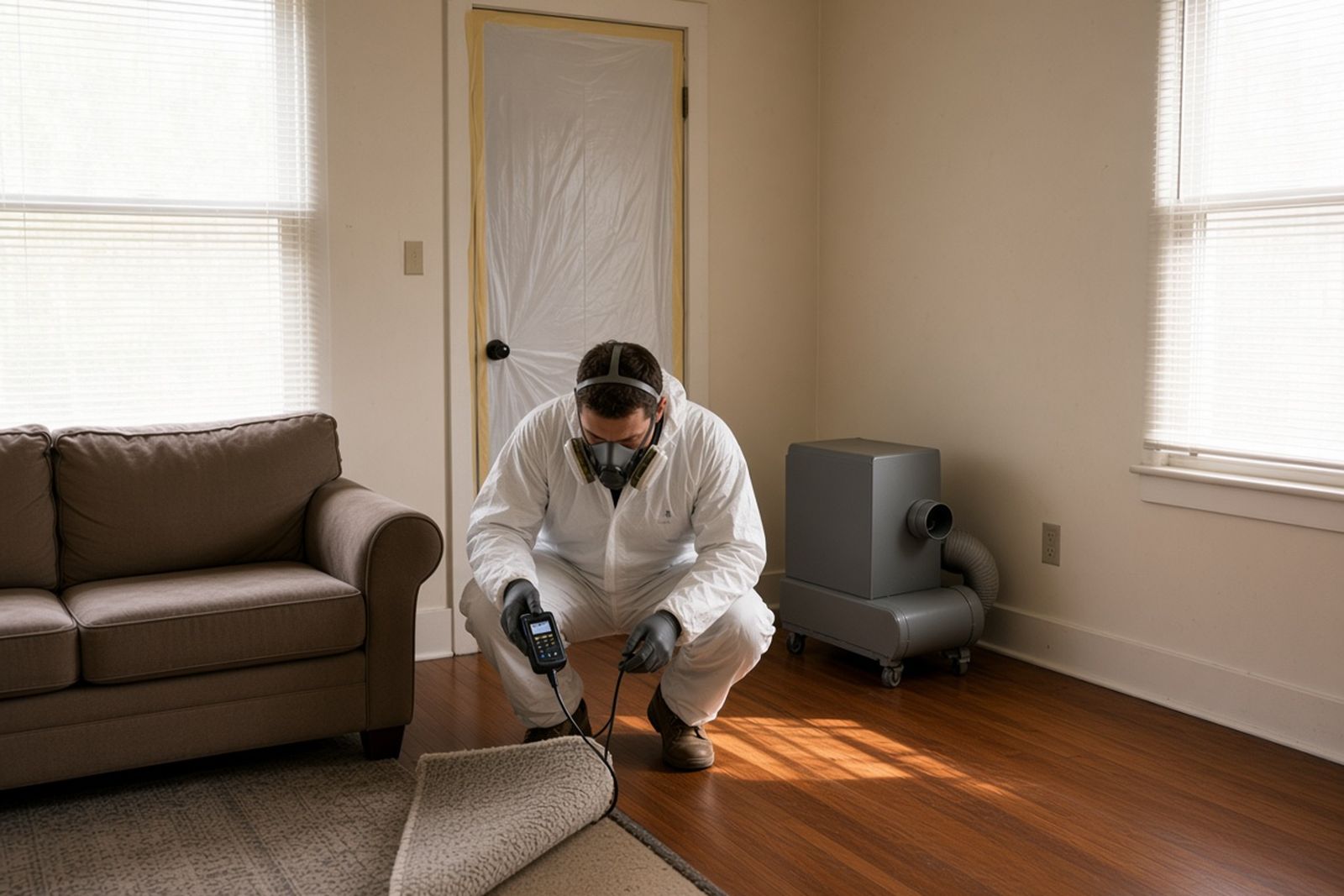
The fix is the step that matches the cause. A UV light maps the stains, carpet and pad come out in the worst areas, the subfloor is cleaned with an enzyme product, dried, and sealed, and new pad and carpet go in, with air treatment last. A disinfection-only job is not necessarily careless in its effort. It simply uses the wrong step for the cause.
Are there safety concerns with disinfectants and deodorizers?
Yes. Disinfectants are regulated pesticides, and many deodorizing products contain strong chemicals. Using them correctly protects both occupants and technicians.
Never mix products, especially bleach with ammonia or with acidic cleaners, because dangerous gases can form. Follow label directions for ventilation and protective equipment. Keep people and pets away from treated areas until products are dry or the label says reentry is safe.
Be cautious with air treatments too. Ozone should only be used in vacant spaces, and any treatment that requires you to leave should come with clear instructions about when you can return. A professional provider will explain these precautions without being asked.
Porous and delicate materials deserve care as well. Some disinfectants can bleach fabrics, damage finishes, or corrode metal if left too long. A provider should test products on inconspicuous areas and tell you ahead of time if any surface in your home might be affected.
Checking a provider's plan against the three steps
Ask for a written scope that separates the three stages. It should say what will be cleaned and how, whether and where a disinfectant will be used and which product, and which deodorizing method will follow.
If the scope says only disinfect or deodorize, ask what will be done about the source. If it says only clean, ask how any remaining odor in porous materials will be handled. A provider who can explain the difference between the steps, and why your situation needs certain ones, is likely to get the job right the first time.
For sewage or decomposition, also ask how the provider will handle the waste, since those materials can carry separate handling requirements.
Cleaning removes what smells. Disinfection kills what keeps making the smell. Deodorizing takes care of what lingers. Most lasting odor problems need cleaning, some need disinfection, and nearly all benefit from careful deodorizing at the end.
Keep that order in mind when you compare providers, and you will be able to tell quickly whether a plan addresses the real cause or just the air.