Short answer
Expect a professional odor removal job to start with investigation, not machines. The technician traces the smell to its source, explains what must be removed or cleaned, and writes a scope. Then comes source removal, cleaning and sealing of affected surfaces, air treatment if needed, and a verification step to confirm the odor is gone once the home returns to normal use.
The first visit is an investigation
The first visit is an investigation. A good technician will ask when you first noticed the smell, whether it changes with weather or time of day, which rooms are worst, and what has already been tried. Those answers narrow the search.
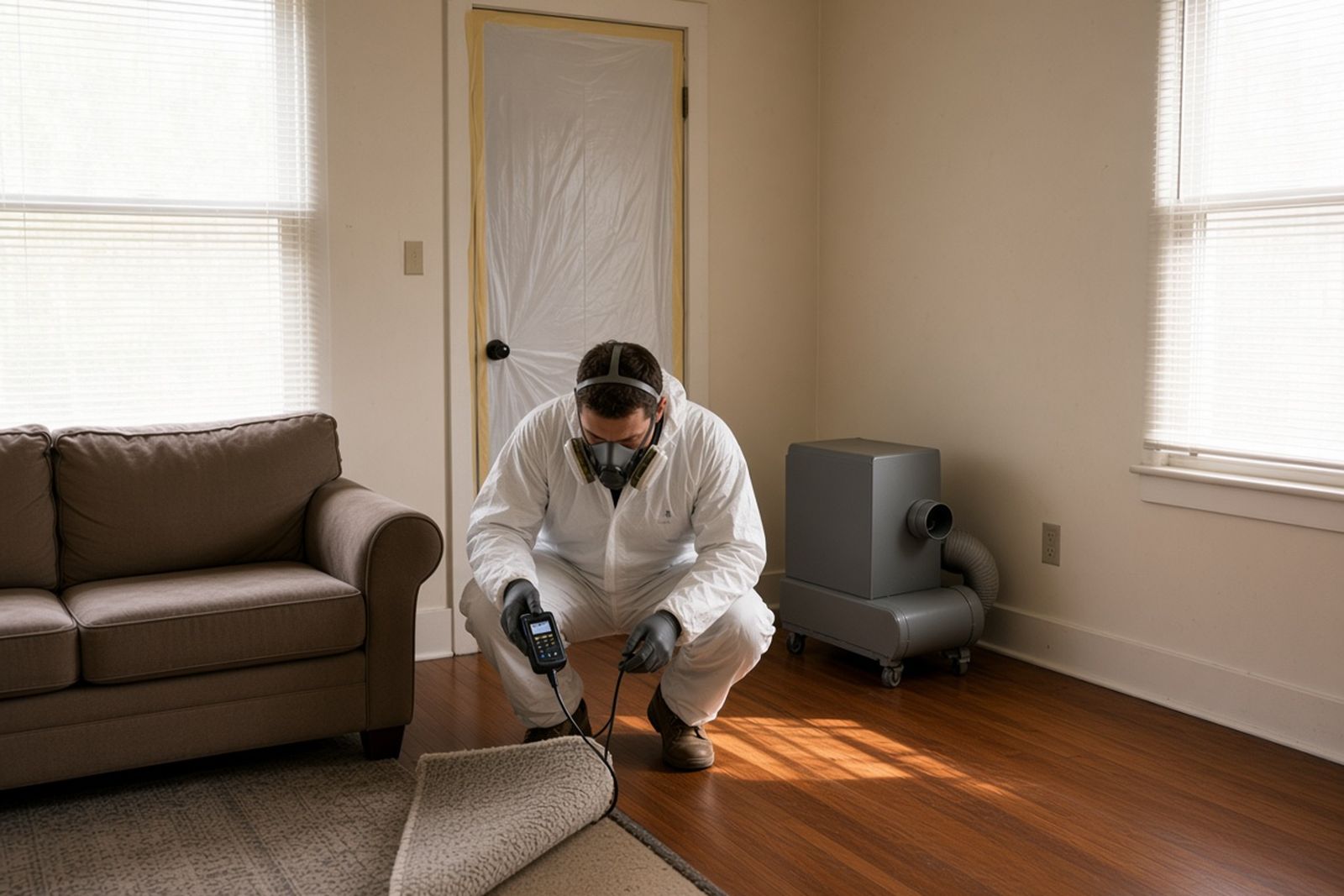
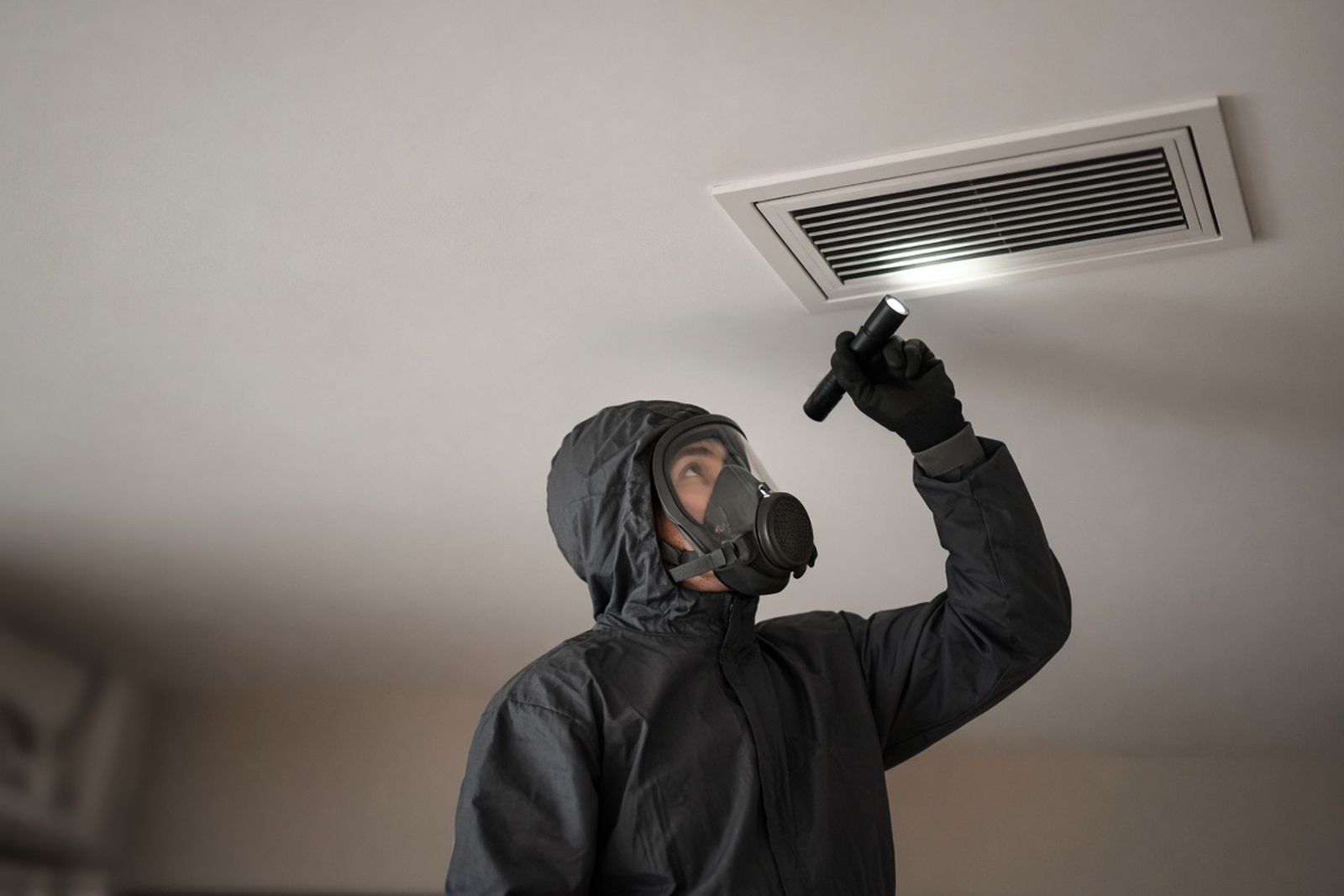
Then comes the walk-through. Expect the technician to use their nose, but also tools. A UV flashlight reveals urine on carpet and baseboards. A moisture meter finds damp drywall or subfloor. Lifting a carpet corner, removing a vent cover, or looking into a crawlspace often tells more than any instrument.
Sources that take detective work
Some sources are obvious, such as a room where a pet was confined or a kitchen after a fire. Others take real detective work, like a dead animal in a wall cavity or a dry P-trap letting sewer gas into a basement bathroom. Be patient with this stage. It is the part that decides whether the job works.
Before leaving, the technician should explain what they found, what they suspect, and what they could not confirm without opening a wall or lifting flooring.
What the written scope should include
A written scope turns the investigation into a plan. It protects you from vague promises and gives you something to compare with other providers.
Look for a scope that names every affected area and describes the action planned for each one. If an item says only deodorize or treat, ask what that means in practice.
Ask the provider to walk you through the scope in person or by phone. A few minutes of explanation often surfaces a misunderstanding, such as whether a closet or a stairwell is included, before it turns into a disagreement.
- The identified or suspected odor source and how it was confirmed
- Each room or area, with the materials to be removed, cleaned, sealed, or treated
- Contents such as furniture, mattresses, or clothing and how they will be handled
- HVAC work, including duct cleaning, coil cleaning, and filter replacement
- Air treatment method, duration, and any occupancy restrictions
- How the result will be verified and what happens if the odor returns
- Exclusions, such as reconstruction or hidden damage discovered later
How is the source actually removed?
Source removal is the heart of the job. Odor molecules come from a reservoir, and the reservoir has to go or be sealed. Air treatment on its own cannot outlast a reservoir that keeps releasing compounds.
For pet urine, that may mean pulling carpet and pad, cleaning the subfloor with an appropriate enzyme or oxidizing product, and sealing it. For smoke, it means washing residue off walls, ceilings, cabinet interiors, and hard contents before any sealing. For decomposition, it means removing affected materials under biohazard protocols and disposing of them through a regulated route.
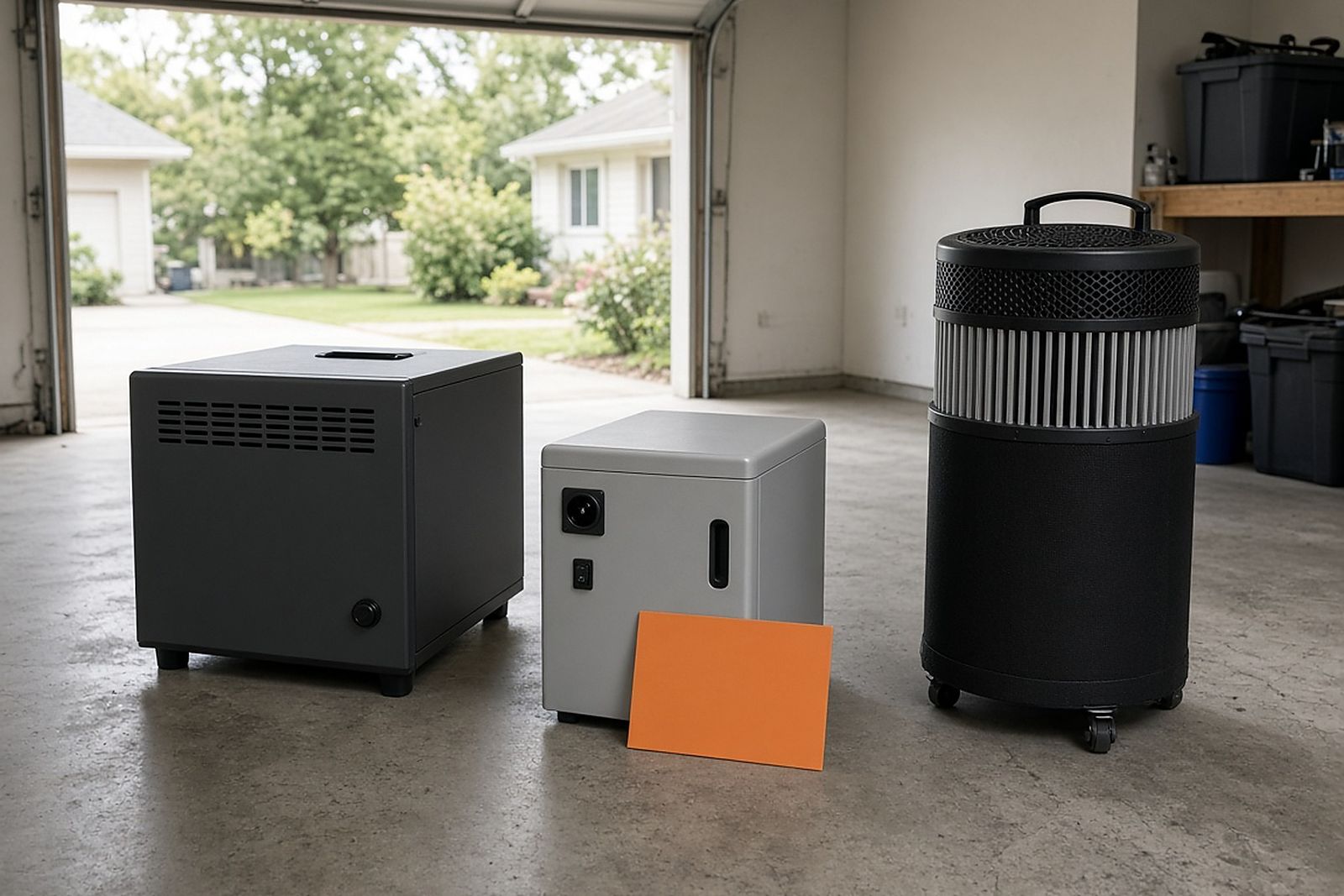
Expect some noise and disruption. Technicians may use containment plastic, negative air machines, and HEPA filtration to keep dust and particles from spreading. The EPA defines a HEPA filter as one that removes at least 99.97% of airborne particles at 0.3 microns, the most penetrating particle size. That filtration protects the rest of the home while materials come out.
If hidden damage turns up, such as a subfloor stained deeper than expected, the technician should stop, show you, and explain any change to the scope before continuing.
Why do technicians clean and seal before treating the air?
Once the source is gone, residue may remain on surfaces that were not removed. Cleaning addresses that residue directly. Sealing then locks in anything that cannot be fully cleaned from porous materials like wood framing or concrete.
Sealing uses specialized primers designed to block odor. They are applied only after cleaning and after surfaces are dry, since sealing over moisture or heavy residue can trap problems that return later.
This order matters for fire and smoke work in particular. Ask whether your provider follows recognized industry standards for fire and smoke restoration, or can explain why its approach differs.
In homes with long-term smoking, walls may need more than one cleaning pass. A technician may test a small area first to see how much residue comes off before deciding how many passes are needed.
What happens during air treatment, and do I have to leave?
Air treatment is the finishing step. Common methods include hydroxyl generators, thermal fogging, activated carbon filtration, and, in some cases, ozone. Each has different strengths and different precautions.
Ozone requires that people, pets, and plants leave the treated area, and it can damage rubber, some fabrics, and artwork. The space must be ventilated and cleared before anyone returns.
Hydroxyl units are often used with people nearby, though you should follow the provider's instructions. Thermal fogging usually requires the space to be vacant for a period. Ask exactly how long you need to stay out and what signs mean the space is ready.
Plan for this ahead of time. Pets may need boarding, and you may need a night or two elsewhere.
Start to finish: a sample job (illustrative)
A sample job, sketched as a composite rather than taken from a real client, shows the whole arc. A couple buys a 1970s ranch house and notices a sharp smell in the back bedroom once summer humidity arrives. They had not smelled it during winter showings.
The technician finds urine staining under the carpet with a UV light, confirms that the subfloor is stained in two spots, and sees older staining on the baseboard. The scope includes removing carpet and pad in that room, cleaning and sealing the subfloor, replacing the baseboard, cleaning the bedroom's supply duct, and running a hydroxyl unit for two days.
Removal and cleaning take one day. Sealing and drying take another. Hydroxyl runs while the couple stays in the rest of the house. A week later, the technician returns and walks the room with windows and doors closed after the space has sat overnight. The smell is gone. The couple then installs new flooring through a separate contractor.
How will I know the job actually worked?
Verification is often skipped, but it is the step that proves the work. The simplest test is a closed-room check: the space sits with doors and windows shut for a set period, then someone who has not been in the room walks in.
Heat and humidity bring hidden odors back out. If you are finishing a job in winter, ask whether the provider will return once warm weather arrives. Some providers offer a follow-up visit within a stated window.
Moisture readings help too. A dry subfloor and dry drywall mean the conditions that pull odor out of materials are under control.
Be honest with yourself during the check as well. People who live with an odor for months often become used to it, and people who have just paid for a job want it to have worked. Asking a friend or neighbor who has never been in the house to do the sniff test gives you a fresher opinion.
Helping the process go smoothly
A few steps on your side make the work faster and more successful.
Communication helps as much as preparation. If you notice the smell returning in a specific spot, at a specific time, or after a specific activity like running the dryer, write it down and share it. Patterns like these often point straight to a remaining source.
- Share every detail you know about the smell's history, even if it seems unimportant
- Stop using masking sprays and candles before the inspection so the technician can smell the real source
- Remove valuables and personal items from work areas
- Arrange care for pets and plan where you will stay during any vacancy period
- Fix known moisture problems, such as a leaking pipe, before or during the odor work
- Keep the written scope, invoices, and photos in one place
Warning signs during the process
Be cautious if a provider wants to start treatment before explaining the source. A machine placed in the living room on the first visit, with no inspection under carpet or behind vents, is a sign that you may be paying for masking.
Also be cautious of guarantees that sound too broad, such as a promise that any smell will disappear in one visit. Honest providers explain uncertainty, especially when a source is hidden inside a wall or under a slab.
If anyone in the home feels ill, stop and ventilate. Some odors signal a real exposure concern, including sewer gas and certain chemicals.